

Ukraine: New strikes disrupt basic services for millions
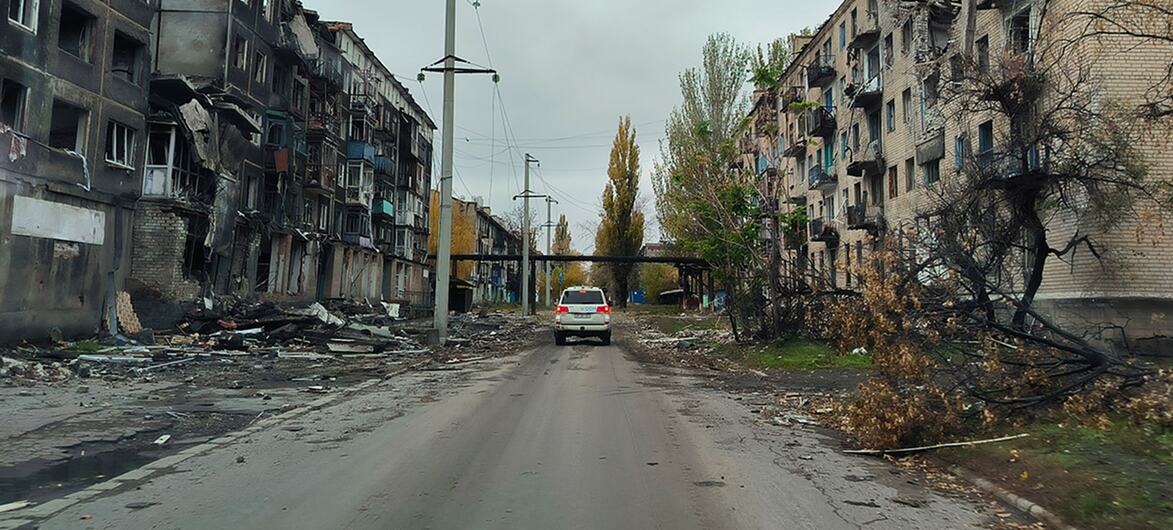
Several parts of Ukraine were hit by a new wave of Russian strikes between Wednesday and Thursday morning.
The attacks over the last 24 hours left civilians reportedly killed and injured in the port city of Odesa, interrupting power and water supplies there, as well as in the regions of Dnipro and Zaporizhzhia, UN Humanitarian Coordinator for Ukraine Matthias Schmale wrote in a social media post.
Along with basic services, the UN aid coordination office (OCHA) noted that mobile communications and public electronic transport have also been disrupted, leading the mayor of Dnipro to declare a state of emergency.
Ukraine has seen dozens of civilians killed or injured, infrastructure damaged and heating disrupted in recent weeks, amid freezing temperatures.
One of the largest combined attacks
In his statement, Mr. Schmale stressed that the strikes have put the most vulnerable at risk – older people, those with health conditions and families with children.
The attacks on energy facilities have left an estimated two million people in Dnipro and Zaporizhzhia regions with limited electricity, heating and water supply.
“Civilians and civilian infrastructure are protected under international humanitarian law. People should be safe and protected in their homes,” Mr. Schmale wrote.
Attacks in the city of Kryvyi Rih and Dnipro were among the largest combined attacks since the eruption of the conflict in 2022, the UN Spokesperson Stéphane Dujarric told journalists on Thursday.
What is the UN doing in Ukraine?
Over 20 UN programmes and agencies are currently active in Ukraine, collaborating with partners to distribute emergency assistance, winter supplies and warm blankets, provide heating points and monitor conditions in the country.
One of the most high stakes contingents is the International Atomic Energy Agency (IAEA), which works to help stabilize the security situation and prevent an accident involving Ukraine’s nuclear facilities, including Europe’s largest nuclear power plant in war-torn Zaporizhzhia.
The UN Children’s Fund (UNICEF) helps support Ukrainians’ access to education, maternal and child health and psychosocial support, among other services.
And earlier this week, the Food and Agriculture Organization (FAO) released its emergency response and early recovery planto help rural families, including small-scale farmers, build up sustainable food production and support Ukraine’s agricultural sector overall.
Coordinating the entire humanitarian response is OCHA, which also provides daily updates on the situation on the ground.
© UN News (2026) — All Rights Reserved. Original source: UN News