

WHO: Urgent Action Needed for the Future of Cancer Care
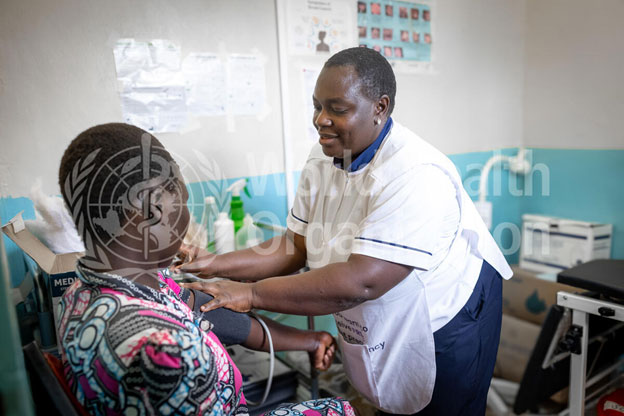
UNITED NATIONS, July 15 (IPS) - One in five people will be diagnosed with cancer in their lifetime, and when the emotional and physical toll on close family members is factored in, an estimated 92 percent of people globally will be affected by cancer at least once in their lifetime. This staggering statistic is the centerpiece of the World Health Organization (WHO)’s latest global report on cancer.
The Global Status Report on Cancer 2026, published in July 8 in conjunction with the International Agency for Research on Cancer (IARC), is the most comprehensive cancer assessment to date and provides an in-depth analysis of the current global status of cancer care and prevention. The report also paints an alarming picture of persistent and widening inequities in prevention, diagnosis, treatment, and care.
WHO estimates that cancer claimed nearly 10 million lives in 2024 (over 26,000 lives every day), along with 20.6 million new diagnoses globally. Without urgent and accelerated action, annual cancer cases are projected to rise to 35 million by 2050, said Stephane Dujarric, Spokesperson for the UN Secretary-General on July 8. Furthermore, the steepest increases in cancer cases are projected to disproportionately burden low-and-middle-income countries (LMICS), with a 133 percent increase in cancer incidence rates in low-income countries and an 86.5 percent increase in lower-middle-income countries by 2050.
The report highlighted the deep global inequities in cancer survival rates. In high-income countries, the five-year net survival rate for breast cancer exceeds 85 percent, while, in low-income countries it drops below 45 percent. For childhood leukemia, only 54 percent of countries have reached the 60 percent five-year survival rate that WHO’s Global Institute for Childhood Cancer set as the minimum target. Furthermore, there are stark regional differences, with some African and Eastern Mediterranean countries falling at only 19 percent, and some South-East Asian countries at 26 percent.
The regional disparities are highlighted by the report’s statement that “our experience of [cancer] and chances of surviving now depend less on the stage or biology of our disease than on where we live and our economic circumstances.” A primary driver of these inequities is limited treatment capabilities and infrastructure in LMICs. For example, 23 LMICs lack any active radiation facilities, resulting in over 197 million people without local access to any critical radiation treatment. Furthermore, even when facilities exist in LMICs, they are chronically unreliable and subject to downtime, high operating costs, limited local maintenance expertise, and delays in importing parts.
While the physical and emotional health effects of cancer are astronomical, the financial consequences for families are just as devastating. Approximately 45–60 percent of people diagnosed with cancer experience catastrophic health expenditure, leading to impoverishment, food insecurity, and disrupted education for the children and siblings of cancer patients. Even in countries that have universal health coverage, the indirect costs of cancer are detrimental, and female caregivers experience greater consequences for their employment and productivity than men.
Throughout the report, prevention is highlighted as the most important yet underused tool for reducing cancer incidence rates. In 2022, 38 percent of cancer cases were attributed to 30 modifiable risk factors, with tobacco use, infections, alcohol consumption, and excess body weight as the primary factors. However, only 30 percent of national cancer control plans incorporate evidence-based cancer prevention interventions.
The WHO outlined three strategic shifts to help shape the future of cancer control: better capabilities, better protections, and better value. These shifts are anchored in a person-centered cancer agenda that is shaped by lived experience. Cancer care needs stronger governance and financing that is centered around investing in human resources. Globally, there needs to be a primary focus on prevention through early detection and equitable access to diagnosis and treatment. Outcomes must be focused not just on survival but also on function and quality of life.
The report concluded, “the primary gap is no longer a gap in knowledge, but a gap between what we know and what we do, between what we plan and what we implement.” WHO Director-General, Dr. Tedros Adhanom Ghebreyesus, emphasized that the path forward for cancer care “must be shaped by more than data and scientific research; they must also reflect the voices and lived experiences of people impacted by the disease.”
IPS UN Bureau Report
© Inter Press Service (20260715044827) — All Rights Reserved. Original source: Inter Press Service