

Why Is Biodiversity Important? Who Cares?
Author and Page information
- This page: https://www.globalissues.org/article/170/why-is-biodiversity-important-who-cares.
- To print all information (e.g. expanded side notes, shows alternative links), use the print version:
At least 40 per cent of the world’s economy and 80 per cent of the needs of the poor are derived from biological resources. In addition, the richer the diversity of life, the greater the opportunity for medical discoveries, economic development, and adaptive responses to such new challenges as climate change.
On this page:
What is Biodiversity?
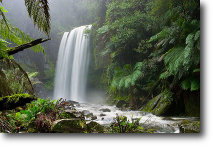 The variety of life on Earth, its biological diversity is commonly referred to as biodiversity.
The number of species of plants, animals, and microorganisms, the enormous diversity of genes in these species, the different ecosystems on the planet, such as deserts, rainforests and coral reefs are all part of a biologically diverse Earth.
Appropriate conservation and sustainable development strategies attempt to recognize this as being integral to any approach to preserving biodiversity. Almost all cultures have their roots in our biological diversity in some way or form.
Declining biodiversity is therefore a concern for many reasons.
Why is Biodiversity Important?
Biodiversity boosts ecosystem productivity where each species, no matter how small, all have an important role to play.
For example,
- A larger number of plant species means a greater variety of crops
- Greater species diversity ensures natural sustainability for all life forms
- Healthy ecosystems can better withstand and recover from a variety of disasters.
And so, while we dominate this planet, we still need to preserve the diversity in wildlife.
A healthy biodiversity offers many natural services
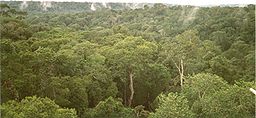
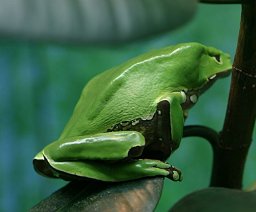
A healthy biodiversity provides a number of natural services for everyone:
- Ecosystem services, such as
- Protection of water resources
- Soils formation and protection
- Nutrient storage and recycling
- Pollution breakdown and absorption
- Contribution to climate stability
- Maintenance of ecosystems
- Recovery from unpredictable events
- Biological resources, such as
- Food
- Medicinal resources and pharmaceutical drugs
- Wood products
- Ornamental plants
- Breeding stocks, population reservoirs
- Future resources
- Diversity in genes, species and ecosystems
- Social benefits, such as
- Research, education and monitoring
- Recreation and tourism
- Cultural values
That is quite a lot of services we get for free!
The cost of replacing these (if possible) would be extremely expensive. It therefore makes economic and development sense to move towards sustainability.
A report from Nature magazine also explains that genetic diversity helps to prevent the chances of extinction in the wild (and claims to have shown proof of this).
To prevent the well known and well documented problems of genetic defects caused by in-breeding, species need a variety of genes to ensure successful survival. Without this, the chances of extinction increases.
And as we start destroying, reducing and isolating habitats, the chances for interaction from species with a large gene pool decreases. Side NoteUnfortunately the original link to the Nature.com article no longer works, since their site redesign, and I had not noted the publication details. However, for similar information, you could look at Consequences of changing biodiversity, Nature 405, 234 - 242, 11 May 2000 and Causes, consequences and ethics of biodiversity, Nature 405, 208–211, 11 May 2000.
Species depend on each other
While there might be survival of the fittest
within a given species, each species depends on the services provided by other species to ensure survival. It is a type of cooperation based on mutual survival and is often what a balanced ecosystem
refers to.
Soil, bacteria, plants; the Nitrogen Cycle
The relationship between soil, plants, bacteria and other life is also referred to as the nitrogen cycle:
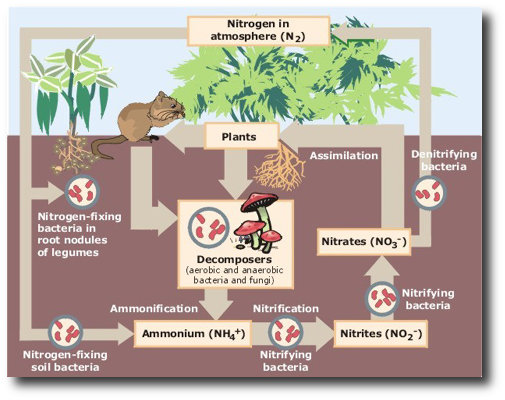
As an example, consider all the species of animals and organisms involved in a simple field used in agriculture. As summarized from Vandana Shiva, Stolen Harvest (South End Press, 2000), pp 61–62:
- Crop byproducts feed cattle
- Cattle waste feeds the soil that nourish the crops
- Crops, as well as yielding grain also yield straw
- Straw provides organic matter and fodder
- Crops are therefore food sources for humans and animals
- Soil organisms also benefit from crops
- Bacteria feed on the cellulose fibers of straw that farmers return to the soil
- Amoebas feed on bacteria making lignite fibers available for uptake by plants
- Algae provide organic matter and serve as natural nitrogen fixers
- Rodents that bore under the fields aerate the soil and improve its water-holding capacity
- Spiders, centipedes and insects grind organic matter from the surface soil and leave behind enriched droppings.
- Earthworms contribute to soil fertility
- They provide aerage, drainage and maintain soil structure.
- According to Charles Darwin,
It may be doubted whether there are many other animals which have played so important a part in the history of creatures.
- The earthworm is like a natural tractor, fertilizer factory and dam, combined!
- Industrial-farming techniques would deprive these diverse species of food sources and instead assault them with chemicals, destroying the rich biodiversity in the soil and with it the basis for the renewal of the soil fertility.
Shiva, a prominent Indian scientist and activist goes on to detail the costs associated with destroying this natural diversity and traditional farming techniques which recognize this, and replacing this with industrial processes which go against the nature of diversity sustainability.
Bees: crucial agricultural workers
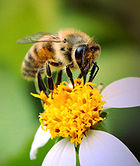
Bees provide enormous benefits for humankind as another example.
As reported by CNN (May 5, 2000), One third of all our food—fruits and vegetables—would not exist without pollinators visiting flowers. But honeybees, the primary species that fertilizes food-producing plants, have suffered dramatic declines in recent years, mostly from afflictions introduced by humans.
As German bee expert Professor Joergen Tautz from Wurzburg University adds:
Bees are vital to bio diversity. There are 130,000 plants for example for which bees are essential to pollination, from melons to pumpkins, raspberries and all kind of fruit trees — as well as animal fodder — like clover.
Bees are more important than poultry in terms of human nutrition.
Researchers are finding reasons for the massive decline hard to pinpoint, but suspect a combination of various diseases, environmental pollution, environmental degradation (leading to less diversity for bees to feed from, for example) and farming practices (such as pesticides, large monoculture cropping, etc).
The link and dependency between plants, bees, and human agriculture is so crucial, the two scientists writing up years of research into the problem summarized with this warning:
Humankind needs to act quickly to ensure that the ancient pact between flowers and pollinators stays intact, to safeguard our food supply and to protect our environment for generations to come. These efforts will ensure that bees continue to provide pollination and that our diets remain rich in the fruits and vegetables we now take for granted.
Interdependent marine ecosystem
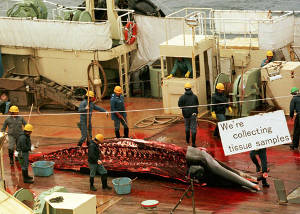
An example from the seas (originally mentioned here years ago but removed because the link to the story no longer worked), was described by National Geographic Wild in a program called, A Life Among Whales (broadcast June 14, 2008).
It noted how a few decades ago, some fishermen campaigned for killing whales because they were threatening the fish supply and thus jobs.
A chain of events eventually came full circle and led to a loss of jobs:
- The massive reduction in the local whale population meant killer whales in the region (usually preying on younger whales) moved to other animals such as seals;
- As seal numbers declined, the killer whales targeted otters;
- As otter numbers were decimated, the urchins and other targets of otters flourished;
- These decimated the kelp forests where many fish larvae grew in relative protection;
- The exposed fish larvae were easy pickings for a variety of sea life;
- Fishermen’s livelihoods were destroyed.
Large carnivores essential for healthy ecosystems
Three quarters of the world’s big carnivores are in decline. A study in the journal Science, notes that these large animals — such as lions, leopards, wolves and bears — are in decline, due to declining habitats and persecution by humans..
This also has a negative impact on the environment, perhaps partly formed by outdated-views that predators are harmful for other wildlife. As the study notes, human actions cannot fully replace the role of large carnivores because these large carnivores are an intrinsic part of an ecosystem’s biodiversity.
As a simple example, the loss of a large carnivore may mean in the short term the herbivores they prey on may increase in numbers but this can also result in a deterioration of the environment as the herbivores can graze more, largely unchecked. Human intervention to perform the same services would be more costly.
Interdependency vs Human Intervention
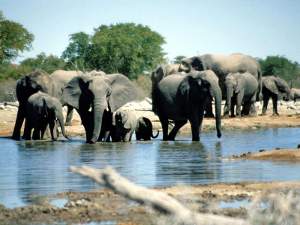
Nature can often be surprisingly resilient, often without the need for human interventions. For example, a documentary aired on the BBC (I unfortunately forget the name and date, but in the 1990s) described two national parks in Africa where elephant populations had grown quite large within those artificial boundaries. The usual way to deal with this was to cull the population to try and keep the ecosystem in balance. Without this, elephants were stripping vegetation bare, affecting other animals, too.
.jpg)
A scientist pleaded with park management not to cull and let nature take its course. Being against prevailing thought, they would not agree. In the end they agreed to let one park have its elephants culled, while the other would be left alone.
A few years later, they found the park with the culled population had remained in poor condition. The park where things were left alone has naturally regenerated; the large elephant populations eventually reduced in number as they undermined their own resource base. The natural pace at which this happened allowed vegetation to grow back. Other wildlife grew in numbers and the ecosystem was generally back in balance.
Biodiversity providing lessons for scientists in engineering
For a number of years now, scientists have been looking more and more at nature to see how various species work, produce, consume resources, trying to mimic the amazing feats that millions of years of evolution has produced.
As just one small example, some spiders can produce their silk with a higher tensile strength than many alloys of steel even though it is made of proteins. So biologists are looking at these processes in more depth to see if they can reproduce or enhance such capabilities.
More important than human use or biological interest
Many people may support environmental causes to help preserve the beauty
of Nature. However, that is in a strange way, not really a justifiable excuse as it is a subjective, human or anthropomorphasized view.
For many decades, various environmentalists, biologists and other scientists, have viewed the entire earth as a massive living organism or system due to the interdependent nature of all species within it. Some cultures have recognized this kind of inter-relationship for a very long time. Some have termed this Gaia.
While there are disagreements and differences on how this works, it suggests that ecological balance and biodiversity are crucial for all of earth, not just humans.
Putting an economic value on biodiversity
It was noted earlier that ecosystems provide many services to us, for free.
Although some dislike the thought of trying to put an economic value on biodiversity (some things are just priceless), there have been attempts to do so in order for people to understand the magnitude of the issue: how important the environment is to humanity and what costs and benefits there can be in doing (or not doing) something.
The Economics of Ecosystems and Biodiversity (TEEB) is an organization — backed by the UN and various European governments — attempting to compile, build and make a compelling economics case for the conservation of ecosystems and biodiversity.
In a recent report, The Economics of Ecosystems and Biodiversity for National and International Policy Makers 2009, TEEB provided the following example of sectors dependent on genetic resources:
| Sector | Size of Market | Comment |
|---|---|---|
| The Economics of Ecosystems and Biodiversity for National and International Policy Makers 2009 , p.17 | ||
| Pharmaceutical | US$ 640 bn. (2006) | 25-50% derived from genetic resources |
| Biotechnology | US$ 70 bn. (2006) from public companies alone | Many products derived from genetic resources (enzymes, microorganisms) |
| Agricultural seeds | US$ 30 bn. (2006) | All derived from genetic resources |
| Personal care, Botanical and food & Beverage industries | US$ 22 bn. (2006) for herbal supplements
US$ 12 bn. (2006) for personal care US$ 31 bn. (2006) for food products | Some products derived from genetic resources. represents ‘natural’ component of the market. |
In addition, it is estimated that implementing REDD (Reducing Emissions from Deforestation and Forest Degradation) could help
- Halve deforestation by 2030, and
- Cut emissions by 1.5 Gt of CO2 per year.
From a cost perspective (p.18), it is estimated that
- It would cost from US$ 17.2 – 33 billion per year
- The estimated benefit in reduced climate change is US$ 3.2 trillion
- The above would be a good return on the initial investment. By contrast, waiting 10 more years could reduce the net benefit of halving deforestation by US$ 500 billion.
In addition, they cited another study that estimated that 3,000 listed companies around the world were responsible for over $2 trillion in environmental externalities
(i.e. costs that have to be borne by society from ignored factors, or social costs
). This is equivalent to 7% of their combined revenues and up to a third of their combined profits.
The benefits of these silent parts of our economy is also summarized in these videos by TEEB’s Pavan Sukhdev:
The BBC notes that biodiversity is fundamental to economics. For example,
- The G8 nations, together with 5 major emerging economies — China, India, South Africa, Brazil, Mexico — use almost three-quarters of the Earth’s biocapacity
- An estimated 40% of world trade is based on biological products or processes.
Despite these free benefits, it has long been recognized that we tend to ignore or underestimate the value of those services. So much so that economic measures such as GDP often ignores environmental costs.
The economic benefits of protecting the environment are well-understood, even if seemingly rarely practiced:
Numerous studies also show that investments in protected areas generate a cost-benefit ratio of one to 25 and even one to 100 in some cases, [Pavan Sukhdev, from TEEB] said. Planting and protecting nearly 12,000 hectares of mangroves in Vietnam costs just over a million dollars but saved annual expenditures on dyke maintenance of well over seven million dollars.
It has perhaps taken about a decade or so — and a severe enough global financial crisis that has hit the heart of this way of thinking — to change this mentality (in which time, more greenhouse gases have been emitted — inefficiently).
Economists talk of the price signal that is fundamental to capitalism; the ability for prices to indicate when a resource is becoming scarcer. At such a time, markets mobilize automatically to address this by looking for ways to bring down costs. As a result, resources are supposedly infinite. For example, if energy costs go up, businesses will look for a way to minimize such costs for themselves, and it is in such a time that alternatives come about and/or existing resources last longer because they are used more efficiently. Running out of resources
should therefore be averted.
However, it has long been argued that prices don’t truly reflect the full cost of things, so either the signal is incorrect, or comes too late. The price signal also implies the poorest often pay the heaviest costs. For example, commercially over-fishing a region may mean fish from that area becomes harder to catch and more expensive, possibly allowing that ecosystem time to recover (though that is not guaranteed, either). However, while commercial entities can exploit resources elsewhere, local fishermen will go out of business and the poorer will likely go hungry (as also detailed on this site’s section on biodiversity). This then has an impact on various local social, political and economic issues.
In addition to that, other related measurements, such as GNP are therefore flawed, and even reward unproductive or inefficient behavior (e.g. Efficiently
producing unhealthy food — and the unhealthy consumer culture to go with it — may profit the food industry and a private health sector that has to deal with it, all of which require more use of resources. More examples are discussed on this site’s section on consumption and consumerism).
Our continued inefficient pumping of greenhouse gases into the environment without factoring the enormous cost as the climate already begins to change is perhaps an example where price signals may come too late, or at a time when there is already significant impact to many people. Resources that could be available more indefinitely, become finite because of our inability or unwillingness to change.
Markets fail to capture most ecosystem service values. Existing price signals only reflect - at best - the share of total value that relates to provisioning services like food, fuel or water and their prices may be distorted. Even these services often bypass markets where carried out as part of community management of shared resources. The values of other ecosystem services are generally not reflected in markets apart from a few exceptions (such as tourism).
This is mainly explained by the fact that many ecosystem services are ‘public goods’ or ‘common goods’: they are often open access in character and non-rival in their consumption. In addition, their benefits are felt differently by people in different places and over different timescales. Private and public decisions affecting biodiversity rarely consider benefits beyond the immediate geographical area…. They can also overlook local public benefits … in favor of private benefits …, even when local livelihoods are at stake, or focus on short-term gains to the detriment of the sustained supply of benefits over time….
Benefits that are felt with a long-term horizon (e.g. from climate regulation) are frequently ignored. This systematic under-valuation of ecosystem services and failure to capture the values is one of the main causes underlying today’s biodiversity crisis. Values that are not overtly part of a financial equation are too often ignored.
In effect, as TEEB, and many others before have argued, a key challenge will be adapting our economic systems to integrate sustainability and human well-being as well as other environmental factors to give us truer costs (after all, market systems are supposed to work when there is full availability of information).
Think of some of the effects this could have:
- Some industrial meat production, which is very harmful for the environment, may become more expensive
- For example, as mentioned in the previous link, if water used by the meat industry in the United States were not subsidized by taxpayers, common hamburger meat would cost $35 a pound.
- Instead of regulation to change people’s habits, markets would automatically reflect these true costs; consumers can then make better informed choices about what to consume, e.g. by reducing their meat consumption or demand more ecologically sustainable alternatives at reasonable cost.
- A reduction in meat production could protect forests or help reduce clearance of forests for cattle ranches, which would have a knock-on benefit for climate change concerns.
- Appropriate investment in renewable energy could threaten the fossil fuel industry though they are trying to adapt to that (perhaps slowly, and after initial resistance). But at the same time, governments that are able to use renewable sources are less likely to find themselves spending so many resources in geopolitical areas (e.g. politics, military, terrorist response to Western presence in Middle East, etc) to protect or secure access to fossil fuels.
Cradle to cradle
type of design — where products are designed to be produced and recycled or disposed of more sustainably — could considerably reduce costs for producers and consumers alike, and possibly reduce stress on associated ecosystems.- Land that is used to produce unhealthy or marginally nutritious items (e.g. tobacco, sugar, possibly tea and coffee) could be used for more useful or healthier alternatives, possibly even helping address obesity and other issues. (For example, while factoring in environmental costs could make healthy produce more expensive too, expanding production of healthier foods could help contain costs rises to some extent.)
- etc.
How much would such accounting save? It is hard to know, but there is a lot of waste in the existing system. In the mid-1990s, the Institute for Economic Democracy calculated that as much as half the American economy constituted of wasted labor, wealth and resources (book: World’s Wasted Wealth, II — see sample chapter).
Naturally, those who benefit from the current system may be hostile to such changes, especially if it may mean they might lose out.
This is a clear case of inter-related issues: the health of the environment is strongly tried to our economic choices (i.e. how we use resources), but addressing core short-comings in our economic systems is a crucial political challenge.
More information
For more information on this question, visit some of the following links
- Scientific American Magazine provides an answer to a reader’s question:
What is the point in preserving endangered species that have no practical use to humans, apart from their aesthetic appeal or their intellectual interest to biologists?
- The WWF also have sections on species and on biodiversity.
- Biodiversity: A Matter of Extinction is a briefing from Panos that highlights the problems that have led to an increasingly alarming rate extinctions, this century alone. Although from 1995, it shows how far back the problem was known (and one can infer that we haven’t therefore done much about the problem since).
- The World Conservation Monitor has sections on biodiversity indicators and biodiversity assessments.
- Biodiversity and its Value from the Department of the Environment and Heritage, Australia, provides many good insights.
Why Conserve Species
from Nature Magazine provides a good answer to this question. (Unfortunately, since their site redesign, this URL is no longer valid, and to date a new URL cannot be found.)Life on the Brink
from Earth Magazine, (Kalmbach Publishing Company), April 97 edition, delivers a very interesting answer to why biodiversity is important. (Unfortunately they no longer publish this magazine so the article is no longer online.)- Biodiversity Benefits People is an online presentation from the United Nations Environment Program
Author and Page Information
- Created:
- Last updated: