“Women in the UN working together to improve the lives of women worldwide”
ROME, Mar 02 (IPS) - This International Women's Day we celebrate women in the changing world of work, recognizing the need to fully realize women's working potential in order to achieve Agenda 2030. We know that when women earn money, they spend it on feeding their families and educating their children. It is estimated that if women farmers had the same access to resources as men, the number of hungry people in the world could be reduced by up to 150 million.
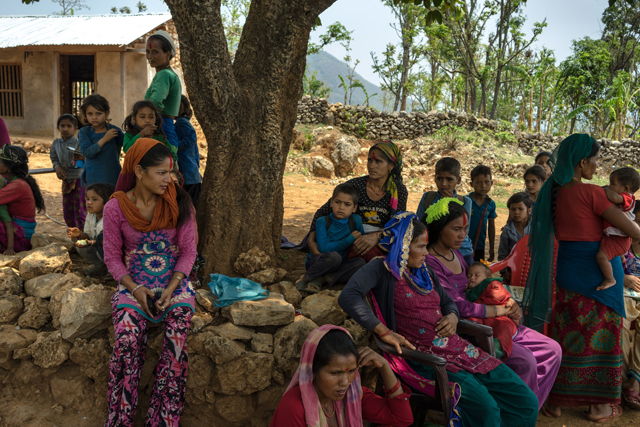
Women worldwide carry the double burden of domestic labor and income-generating work outside the household. Despite working typically 12-13 hours per week more than men in developing countries in Africa and Asia, working women usually go unrecognized. Women in rural areas spend more of their time on domestic chores such as collecting water and firewood, preparing food, transporting goods and caring for children, the elderly and sick. They also work on family farms – spending on average three hours more per day than men on unpaid agricultural work. Equitable access to decent employment opportunities for women is critical to the well-being of their families and communities. Yet most rural women are either unpaid family workers, self-employed or hold precarious jobs for low pay.
In the United Nations, many women are committed to removing the barriers that women face in developing countries. The Joint-Programme on Accelerating Progress towards the Economic Empowerment of Rural Women (RWEE) is one example of how women from different UN agencies – FAO, IFAD, UN Women and WFP - are securing rural women's livelihoods and rights in seven countries. Through the efforts of many women and men, but particularly - Clare Bishop-Sambrook and Beatrice Gerli of IFAD, Susan Kaaria and Libor Stloukal in FAO, Venge Nyirongo of UN Women, Veronique Sainte-Luce of WFP, and Azzurra Chiarini the Global Coordinator - RWEE has supported over 22,500 women and their households by enabling 2,150 women to access financial services; 5,200 to receive business development support; and training almost 4,000 women in improved agricultural technologies. As a smallholder farmer in Nepal, Chandra Kala Thapa faces many barriers to improving her agricultural productivity and income. RWEE provided her with seeds, fertilizers and equipment, and helped her access credit. Engaging the men in the community has resulted in Chandra's husband helping her with the household work and farming. The increased income from diversifying her crops to fruits and vegetables has allowed her to educate her sons and pay for medical care. As President of her Women's Farmers' Group, Chandra also brings women together to find solutions to farming and family problems.
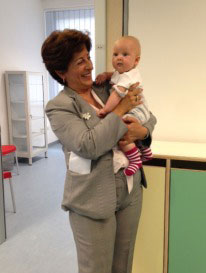
In order for women working in the UN to help women in developing countries, they also need a supportive work environment to take care of their own families. In her former positions at FAO and IFAD, Theresa Panuccio was instrumental in establishing on-site child-care centres which improved women's work-life balance. As we know from our projects, on-site child care can significantly improve women's productivity by reducing absenteeism and the travel time to collect children.
Women worldwide are daughters, mothers, and wives as well as workers – farmers, entrepreneurs, laborers and experts. To unleash our full potential, we need to join together and support one another to care for our families and perform our jobs to the benefit of our communities, societies and countries.
© Inter Press Service (2017) — All Rights Reserved. Original source: Inter Press Service
Where next?
Browse related news topics:
Read the latest news stories:
- ‘The Political System Only Moves When Threatened Directly’ Monday, March 23, 2026
- Gender Equality: A Global Priority or a Global Consensus? Monday, March 23, 2026
- World Heating Faster Than Expected, Scientists Sound Alarm in latest UN Report Monday, March 23, 2026
- UN weather agency warns of record ‘climate imbalance’ as planetary warming accelerates Monday, March 23, 2026
- A city opens its doors to the world: New York and the United Nations Monday, March 23, 2026
- How Kyrgyzstan built a system to support domestic violence survivors Sunday, March 22, 2026
- WHO verifies deadly hospital attack in war-torn Sudan Saturday, March 21, 2026
- War in the Middle East: Iran nuclear facility hit as equivalent of ‘one classroom of children’ killed, wounded daily in Lebanon Saturday, March 21, 2026
- When justice fails: Why women can’t get protection from AI deepfake abuse Saturday, March 21, 2026
- Europe and Multilateralism Friday, March 20, 2026
Learn more about the related issues:
Share this
Bookmark or share this with others using some popular social bookmarking web sites:
 Bluesky