

UN envoy highlights ‘window to advance peace’ in Colombia
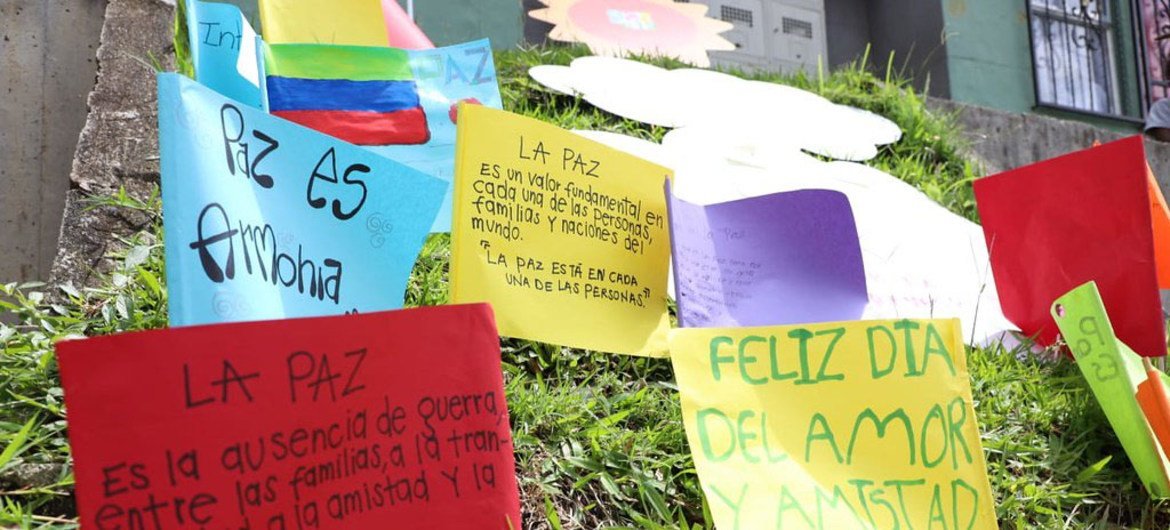
The new year provides an opportunity for Colombia to keep advancing towards lasting peace, a decade after a landmark accord that ended more than 50 years of conflict, the UN Special Representative told the Security Council on Friday.
“At a time of tensions both globally and regionally, it is in everyone’s interest to secure lasting peace and security in Colombia,” said Miroslav Jenča, delivering his quarterly briefing.
He said the coming year “undoubtedly provides a window to advance peace as a strategic national objective, and for Colombia and its partners to engage constructively through dialogue to address shared challenges,” particularly in the border area with Venezuela “where cooperation on all sides is essential.”
Switch in focus
Mr. Jenča also heads the UN Verification Mission in Colombia, and he reported on re-organization outlined in Council resolution 2798 (2025), adopted last October.
The resolution extended the Mission’s mandate for a year and changed its focus to monitoring three provisions of the 2016 peace agreement signed by the Government and FARC-EP rebels:
- Comprehensive rural reform
- Reintegration of former combatants
- Security of both ex-fighters and communities in conflict-affected regions
Previously mandated verification on transitional justice, ethnic-related issues and ceasefire monitoring was discontinued.
Challenges in conflict areas
Mr. Jenča has spent the past three months meeting key counterparts across Colombia who underscored that the three pillars are important for achieving peace.
During visits to several parts of the country, he was “struck not only by the immense challenges facing communities in conflict-affected regions, but also by their resilience and determination to achieve a better future.”
In some of the most remote areas, daily life is a struggle “due to the actions of different illegal armed actors and to the limited presence of the state, public services and development opportunities.”
Limited opportunities
He noted that re-integration of former combatants is essential to the success of peace agreements and ensuring their transition to civilian life is crucial to avoid a return to violence.
“Nevertheless, nine years after the FARC-EP laid down arms under the Peace Agreement, the path has proven challenging for the over 11,000 former combatants who remain active in the government’s reintegration programme,” he said.
These men and women often live in remote areas with limited infrastructure, access to markets, and threats to their security.
“For the authorities, it has also entailed major efforts, both financial and programmatic, to facilitate their transition into civilian life,” he added, noting that while substantial progress has been made but more is needed.
‘Fertile ground’ for armed groups
Access to land has progressed in Colombia but still needs to be fully resolved, Mr. Jenča said. Meanwhile, security remains fragile.
Some 487 former combatants have been killed since laying down their arms. He urged the authorities to step up investigations and prioritize security guarantees for those who signed the peace deal.
Although violence is far lower now than at the height of the conflict, “the presence of armed groups in areas still affected by conflict continues to inflict suffering on entire communities.”
This violence is being fuelled by a mix of factors and limited State presence “provides fertile ground for the armed groups to exert control, and for illicit economies to prevail.”
Rise in child recruitment
As a result, civilian populations have faced threats, killings of social leaders, forced displacement and confinement, and an alarming increase in child recruitment and use by armed groups.
The situation in border areas is particularly complex, he said. The UN Mission’s team in Cúcuta, a city on the border with Venezuela, supports response to continuing clashes between rival armed groups.
Thousands of civilians have been have forced to flee their homes in the Catatumbo region, which he described as “a hub of coca cultivation and cross-border armed activities and criminality.”
‘Holistic vision’ for peace
Mr. Jenča insisted that the Peace Agreement can significantly contribute to addressing many of these problems.
“It offers a much-needed holistic vision, by providing for the strengthening of the State’s capacity to dismantle criminal structures, to promote alternatives to coca cultivation and concrete development measures through its comprehensive rural reform,” he said.
© UN News (2026) — All Rights Reserved. Original source: UN News