

UN Police ‘indispensable’ to fulfilling peacekeeping mandates, Security Council hears
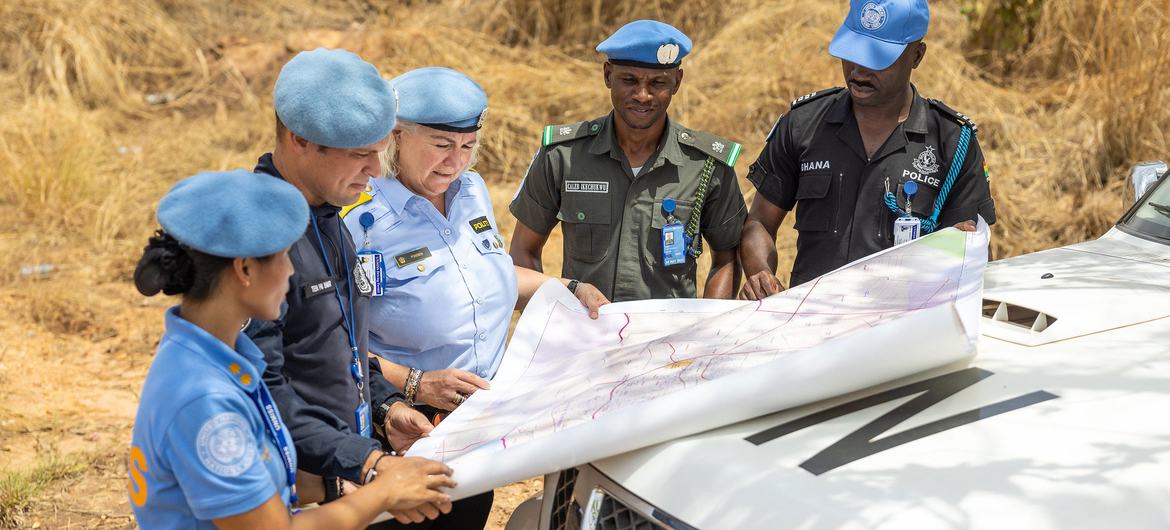
The head of UN Peacekeeping on Thursday called for greater support for international police officers deployed to field missions at a time when financial resources are dwindling and multilateralism is waning.
Jean-Pierre Lacroix was speaking in the UN Security Council during the annual briefing by heads of police components of UN peace operations.
“Despite severe constraints, our police personnel continue to serve with dedication, professionalism and courage,” he said.
“They operate in environments of persistent insecurity, political volatility and growing operational risks.”
Key to peacekeeping
Peace operations depend on UN Police (UNPOL) for community engagement, institutional reform and prevention of criminal and intercommunal violence.
Officers also address challenges that require a policing response, including in environments with high density populations such as displacement camps, among other duties.
“United Nations Police remain a key component of UN peacekeeping and play an indispensable role in fulfilling our mandates,” Mr. Lacroix said.
He stressed that Member States, host countries, uniformed and civilian personnel all share responsibility for ensuring the success of peacekeeping.
This is particularly the case at a time when multilateralism faces unprecedented pressures and peace operations are being asked to do more with less.
Reform and reductions
He noted that the Council meeting was taking place as a comprehensive review of UN peace operations enters its final phase.
It was also held against the backdrop of the UN80 reform initiative and mission contingency planning due to the severe liquidity crisis affecting the entire UN system.
This has led to cost saving measures, including reductions in civilian staff and repatriation of military and police personnel.
Sustainable financing critical
The peacekeeping chief visited some of the UN’s biggest field missions in recent months and saw how these measures have affected mandate delivery, including protection of civilians.
“Efficiency is necessary. We are committed to finding ways to save. However, this efficiency drive cannot substitute for predictable and sustainable financing,” he said.
“As the Secretary-General has emphasized repeatedly, peacekeeping's ability to fulfill its mandates will be severely compromised without the full and timely payment of assessed contributions from Member States.”
Action for Peacekeeping
Mr. Lacroix also highlighted the renewed Action for Peacekeeping (A4P+) initiative which remains the framework for strengthening the effectiveness, safety, and impact of peace operations.
The seven priority areas include upholding political solutions as the core of sustainable peace, strengthening strategic and operational integration, investing in capabilities and mindsets, and deepening cooperation with host-State police and other law enforcement agencies.
“Across all these priorities, the Women, Peace and Security agenda remains central,” he said.
Although progress has been made in increasing women’s participation and leadership in UNPOL, it “remains fragile, particularly in the context of budget cuts.”
Pledges of support
He recalled that the 2025 Peacekeeping Ministerial Meeting in Berlin demonstrated renewed political commitment to peacekeeping.
The event saw record participation and meaningful pledges, including for specialised roles, rapid deployment and training.
“The pledges are essential to ensuring that UN Police are prepared to respond to emerging threats in areas like transnational organized crime, cyber-enabled crime, climate-related insecurity, and the misuse of new technologies,” he said.
Renewed commitment
Mr. Lacroix concluded by saying his briefing was an opportunity not only to take stock of progress, but to renew collective commitment.
“We must ensure that mandates are matched with adequate resources. We must sustain political unity around peacekeeping,” he said.
“We must protect the institutional gains achieved under A4P+.And we must equip United Nations Police to meet the demands of tomorrow.”
© UN News (2026) — All Rights Reserved. Original source: UN News