

COP18—Doha Climate Conference
Author and Page information
- This page: https://www.globalissues.org/article/801/cop18-doha-climate-conference.
- To print all information (e.g. expanded side notes, shows alternative links), use the print version:
On this page:
Introduction
 November 26 – December 7, 2012, Doha, Qatar is the venue for the 18th annual United Nations Climate Change Conference, also known as the 18th Conference of the Parties — or COP 18.
Predictably and sadly, the same issues complained about at previous annual meetings for the past decade continue to recycle themselves:
- Lack of quality (if any) media coverage
- West stalling on doing anything
- Lack of funding
- Disagreement on how to address it
- etc.
As the past two decades have shown trying to get global agreement on tackling climate change seems to be futile. By comparison, more focused and limited interest of elites, however, are easier to push through, such as wars based on geopolitical threats (real and imaginary), or economic crises (where banks and other elites most responsible for the crises are bailed out by ordinary citizens).
Furthermore, as the West has generally shown in the past decade or more (even when their economies were doing good) paying now for something that seems to be a problem in the future is hard to accept. It is easier, therefore, to stall and keep blaming China, India and other emerging nations despite the historical inequality of those emissions. But ignoring that makes it easier to hope these emerging nations will pick up the burden of addressing emissions rises.
A summary from the Malaysian-based development organization, Third World Network, notes that once again there are disagreements on how to proceed with basic aspects of these climate discussions such as how to agree on the next round of emission reductions:
Developing countries want the Doha talks to produce increased ambition in emission reductions for the second commitment period (CP2) while developed countries seem set to maintain their currently weak targets, with uncertainty over the future review of those targets.
Developing countries are also insisting that the [new reduction targets] be established in a ratifiable legally binding amendment of [the Kyoto Protocol], that contains the quantified emission limitation or reduction objectives (QELROs) of each developed country Party.
Many developing countries also want a legal provision for provisional application of the QELROs from 1 January 2013 that developed countries do not support.
According to several developing country delegates, without provisional application on a legal basis, the reduction commitments would be rendered voluntary.
Media coverage
Generally speaking, media coverage of climate change issues and these conferences has been a mixed bag over the past decade. More recent years has seen increased interest and coverage (though many important issues are glossed over in mainstream media sound-byte style reporting).
When I wrote a similar page about a year ago regarding the previous conference, COP 17, I noted that (as with many previous conferences), I described mainstream media coverage as pathetic
and almost non-existent until the very last few moments.
I added that in reality money speaks and so short term and elite/establishment views tend to prevail, which is why governments can so quickly get the 99%
to bail out the banks and the top 1% with many trillions of dollars, while finding billions for fighting even more devastating climate change has taken almost 2 decades so far without any convincing results.
It seems like that will be the case again this year. As of writing, it is half way through the conference and scanning mainstream media headlines in the UK, I see no coverage of the conference (at least not as major news headlines). It is very possible I have missed it, but one would hope that a conference of such importance would not require much detailed look at mainstream media news headlines to find coverage of it.
Indeed, this comes at a time when the British press is facing threats of regulation following scandals about journalist practices by some tabloid papers. Ironically, the British press now fears regulation will hinder their free speech (a legitimate worry). But what free speech are they fighting for? For more narrow coverage and tabloid headlines?
It is worth quoting again an article from Media Lens about a year ago on the poor media quality coverage in recent years.
Media interest in the subject has crashed. Dr. Robert J. Brulle of Drexel University describes a
collapse of any significant coverage of climate change in the [US] media. We know that 2010 was a record low year, and 2011 will probably look much the same. If the media doesn’t draw attention to the issue, public opinion will decline.…
Equally disturbing is the variation in media performance across the globe. A wide-ranging Reuters study on the prevalence of climate skepticism in the world’s media — Poles Apart — The international reporting of climate skepticism - focused on newspapers in Brazil, China, France, India, the UK and the USA. The periods studied were February to April 2007 and mid-November 2009 to mid-February 2010 (a period that included the UN climate change summit in Copenhagen and
Climategate). Remarkably, the study concluded that climate skepticism ispredominantly an Anglo-Saxon phenomenon, found most frequently in US and British newspapers.…
And so we find that Britain and the US — the two countries responding most aggressively to alleged
threatsto human security in countries like Afghanistan, Iraq and Libya — are also the two countries least interested in responding to the very real threat of climate change.
It would be worth reading the media section of the previous conference to see more about media coverage.
President Obama was recently re-elected as President of the United States. It is not clear how much impact the devastating impact of Hurricane Sandy had on climate change policies (and it may also be too early to tell), but many certainly felt that in the days leading up to the election it may have been a factor. Perhaps, importantly, for the first time, climate denial may become a political liability in the US, and it remains to be seen how much the Republicans will hamper Obama’s climate policies.
The more extreme news organization in the US, Fox News, was found to to have 93% of their climate reporting as misleading. And this channel is a prime channel for Republican leaning viewers. This is also despite promises by Murdoch many years ago to improve climate change reporting. But it is not just Fox News, although not media outlets themselves many other influential corporations have been actively supporting misrepresentation of the science around climate change, undermining the US public’s understanding of scientific consensus around climate change.
Numerous recent reports are finding that climate scientists, far from being alarmist and scaremongering, have somewhat underestimated the speed at which climate change impacts such as extreme weather and rising sea levels will happen and that many conditions match their upper estimates rather than any median or better-scenario estimates.
For example, the conference comes at the end of a year that saw record Arctic sea ice melting, multiple global weather and climate extremes, and high temperatures.
For years countries have worried that funding for adaptation and mitigation is not affordable (rich and poor nations alike) and yet, as time goes on, adaptation and mitigation costs will be even higher.
Even the World Bank has chimed in noting that
Coal, oil and gas companies and their backers in the financial and investment industry must stop putting billions of dollars into finding and extracting new sources of fossil fuels. If they don't shift their investments, temperatures will soar four to 10 degrees C higher, devastating many parts of the world, the World Bank said Monday.
Despite years of this, things do not seem to change much. Perhaps it is because there isn’t an emotional attachment to the issue; it is distant, vague, complex. However, as David Robert notes,
Climate change is not only the economic and ecological crisis of our time, it’s also a moral crisis. What we are doing to our descendants is a moral crime. Finding ways to help people get that, feel it in their guts the way they would if someone threatened their own families, is a precondition for serious, sustained action.
More information
As the conference is still underway as this page is written, more information will be added here after the event is over.
For more about the issues from other organizations, here are some starting points:
- Climate Change coverage from Inter Press Service (IPS). (This web site carries an IPS feed.)
- Official COP 18 website
- Updates from the Third World Network
- Coverage from Democracy Now! including useful news videos
News stories from IPS
Below is a list of stories from Inter Press Service related to the Durban climate conference and its aftermath.
Europe’s Heat Wave Shows Climate Change Is Not Just a Poor-Countries Issue
- Inter Press Service

PARIS, July 3 (IPS) - If you pay close attention to the rhetoric regarding climate change (at least in those forums still allowed to use the term), there has been a disturbing emerging trend among some climate-concerned thought leaders, as epitomized by Bill Gates’s letter to COP30 last fall.
Universities Join Hands to Enhance Agroforestry Research for Mitigating Climate Change
- Inter Press Service

NAIROBI, June 29 (IPS) - A team of universities, led by Addis Ababa University, has joined forces to implement a four-year Intra-Africa academic mobility project aimed at strengthening agroforestry research and education for climate change mitigation.
Climate Change Is Coming for Your Morning Coffee
- Inter Press Service

BULAWAYO, Zimbabwe, February 27 (IPS) - Your morning cup of coffee could soon cost more, thanks to climate change, which is raising the heat on the production of the world’s most loved beverage.
How climate change is threatening human rights
- UN News
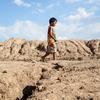
With rising effects of climate change across the globe, the world has started recognising that climate change is not just an ecological collapse, but also a human rights crisis.
Venezuela Needs More Local Data To Understand the Impacts of Climate Change
- Inter Press Service

CARACAS, December 15 (IPS) - A group of 55 researchers gathered and analyzed 1,260 bibliographic references to compile the Second Academic Report on Climate Change in Venezuela. Their final conclusion is that more local studies are still needed to record the direct impacts across different Venezuelan regions and, in particular, to provide data to design the adaptation plans necessary to address climate change.
The World Social Summit in Doha: Time to Act
- Inter Press Service

DOHA, November 12 (IPS) - Qatar hosted the Second World Summit for Social Development from 4–6 November. According to the United Nations, more than 40 Heads of State and Government, 230 ministers and senior officials, and nearly 14,000 attendees took part. Beyond plenaries and roundtables, more than 250 “solution sessions” identified practical ways to advance universal rights to food, housing, decent work, social protection or social security, education, health, care systems and other public services, international labor standards, and the fight against poverty and inequality.
Doha summit ends with call to turn social pledges into action
- UN News

The Second World Summit for Social Development concluded in Doha on Thursday with calls for countries to move swiftly from commitments to implementation, ensuring that the Doha Political Declaration delivers measurable progress on poverty reduction, decent work and social inclusion.
Not just dreams, but rights: Social justice in focus at Doha summit
- UN News

The push to put social justice at the heart of global policymaking took centre stage at the Second World Summit for Social Development on Wednesday, as leaders gathered for a high-level forum to drive coordinated action in delivering the newly adopted Doha Political Declaration.
Doha: World Summit’s second day highlights urgency of investing in people and peace
- UN News
As the Second World Summit for Social Development continued in Doha on Wednesday, governments warned that global progress risks stalling unless social protection, equality and peace are prioritised – and backed with political and financial commitment.
LIVE from Doha: Second World Summit for Social Development
- UN News

Leaders, policymakers and civil society representatives have gathered in Doha for the Second World Summit for Social Development, with the aim of renewing global commitments to inclusion, dignity and social justice. UN News is on the ground, bringing you live updates, key highlights and human stories from inside the conference halls and beyond. Follow this page for rolling coverage throughout the Summit. App users can follow the coverage here.
World leaders adopt Doha declaration to boost efforts on social development
- UN News
Against a backdrop of escalating geopolitical tension and widening social divides, global leaders at the Second World Summit for Social Development on Tuesday adopted the Doha Political Declaration, signalling renewed resolve to advance justice and inclusion worldwide.
Doha Social Summit: Path to fairer societies begins in the classroom
- UN News
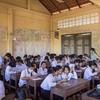
Education took centre stage on the opening day of the Second World Summit for Social Development in Doha, where leaders, educators and youth advocates underscored that learning is the foundation of inclusive and resilient societies.
Doha: World Summit opens with pledge to speed social progress
- UN News

The Second World Summit for Social Development opened in Doha on Tuesday with the adoption of the Doha Political Declaration – a consensus pledge to accelerate action on poverty eradication, decent work and social inclusion, and to put the Sustainable Development Goals (SDGs) back on track.
Global alliance meets in Doha to confront hunger crisis
- UN News
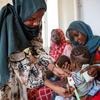
With global hunger rising and millions struggling to secure their next meal, world leaders gathered in Doha on Monday for the first high-level meeting of the Global Alliance Against Hunger and Poverty.
In a quiet community on Doha’s edge, Gaza’s wounded and orphaned learn to heal
- UN News

In the late afternoon light, about 20 kilometres from Doha, the Al-Thumama complex looks like any quiet residential neighbourhood: paved pathways, rows of apartment blocks, the hum of air-conditioning carrying through the warm desert air.
Flags raised in Doha as leaders gather for UN social development summit
- UN News
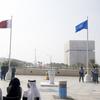
Against a quiet morning sky, the flags of the United Nations and the State of Qatar rose together in Doha on Sunday, ahead of the Second World Summit for Social Development.
From Slogans to Systems: Five Practical Steps for Turning Social Development Commitments into Action at Doha and Beyond
- Inter Press Service

BRUSSELS, Belgium, October 30 (IPS) - Thirty years ago, world leaders gathered in Copenhagen and made a promise: people would be at the center of development. This November, Heads of State and Government will meet again in Doha, Qatar, for the Second World Summit for Social Development or WSSD2.
In Africa’s Sahel, conflict and climate change force millions from their homes
- UN News
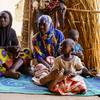
Nearly four million people across Africa’s vast semi-arid Sahel region have been uprooted by a volatile mix of conflict, hunger and climate change, the UN warned on Friday, describing an unfolding protection and survival crisis that is pushing families to flee repeatedly.
United Nations LIVE: Beyond the podium
- UN News
World leaders are gathering this week at United Nations Headquarters in New York at a time of global upheaval. Wars, poverty, human rights abuses and climate change are all issues that the 193 Member States will address with the UN at the centre of those discussions. UN News app users can follow here.
MIDDLE EAST LIVE: Israeli attack on Hamas leaders in Doha ‘opens new and perilous chapter’
- UN News

The Security Council meets in emergency session at the top of the hour to discuss Israel’s strike on the capital of Qatar, Doha, which targeted Hamas’ political leadership on Tuesday. The UN political affairs chief is set to brief ambassadors, with Qatari Prime Minister Sheikh Mohammed bin Abdulrahman Al Thani due to take part – a sign of the diplomatic shockwaves being felt throughout the region and beyond. Follow our live UN meetings coverage here.
Israeli strike in Doha marks ‘alarming escalation’, warns top UN official, in call to uphold diplomatic norms
- UN News
The Security Council on Thursday heard from the UN’s top political affairs official on Israel’s deadly airstrike in Doha – an “alarming escalation” condemned as a violation of sovereignty that threatens ongoing ceasefire and hostage negotiations in Gaza.
Latin America and Caribbean: Millions more children could face poverty due to climate change
- UN News

Climate change could push at least 5.9 million more children and young people in Latin America and the Caribbean into poverty by 2030 unless governments act now.
Climate Change An Existential Threat To Humanity, Urges Action – ICJ
- Inter Press Service

THE HAGUE & JOHANNESBURG, July 23 (IPS) - The case was “unlike any that have previously come before the court,” President of the International Court of Justice Judge Yuji Iwasawa said while reading the court’s unanimous advisory opinion outlining the legal obligations of United Nations member states with regard to climate change.
Human rights can be a ‘strong lever for progress’ in climate change, says UN rights chief
- UN News
The UN’s top rights official on Monday urged the international community to confront the growing human rights implications of climate change.
As Climate Change Threatens, Maldives Is No Island Paradise
- Inter Press Service

GENEVA, May 26 (IPS) - Every year, thousands of couples choose to spend their honeymoon in the Maldives. Tucked in the Indian Ocean, this tropical atoll nation consistently ranks among the world’s most desirable destinations for newlyweds.
But beyond the crystal-clear waters and pristine, white-sand beaches, local communities are facing a far harsher reality: a growing water crisis driven by climate change. While tourists sip cocktails in overwater bungalows, some neighboring islands are literally running out of fresh water.
Climate change takes increasingly extreme toll on African countries
- UN News

Devastating floods in South Sudan in recent months left thousands of herders without their most precious possessions: goats, cows and cattle. The animals are central to people’s lives and age-old customs including marriage and cultural traditions. All risk being swept away or scorched by the ravages of climate change.
Rampant Tourism, Climate Change Threatens Varkala's Unique Geodiversity
- Inter Press Service

VARKALA, India, Apr 24 (IPS) - Varkala is an area with unique geological and geomorphological heritage. But its fragile cliffs are also affected by severe weather and high waves during the monsoon season. Activists say rampant and illegal tourist infrastructure and climate change are putting this dramatic landscape at risk.From the top of the cliff, the beach down below appears like a box of sand, with people scattered on it like tiny ants. This is Varkala, arguably the most sought-after coastal tourism spot in Kerala, India, right now.
Local leaders raise temperature on action to fight climate change
- UN News

City officials, state governors and other leaders across the world are ensuring their localities can benefit from initiatives that tackle climate change and can prosper in an uncertain future.
Award Winning Women Goat Herders in Chile Confront Climate Change
- Inter Press Service

OVALLE, Chile, Mar 21 (IPS) - Chile's goat tradition began in 1544. Now, despite a prolonged drought, the women herders are adapting it to climate change and producing award-winning cheese.Women goat herders in the municipality of Ovalle, in northern Chile, are confronting climate change by defending their heritage through improvements in the quality and variety of their products, which has led some to win international awards for their cheeses.
Climate change: Paris Agreement goals still within reach, says UN chief
- UN News
The effects of human-driven climate change surged to alarming levels in 2024, with some consequences likely to be irreversible for centuries - if not millennia – according to a new report from the World Meteorological Organization (WMO).
Author and Page Information
- Created: