HEALTH: High Drug Prices Hamper Drug-Resistant TB Treatment
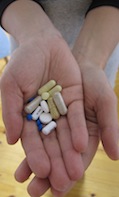
Access to treatment for drug-resistant tuberculosis (DR-TB) remains compromised, especially in developing countries, because too few pharmaceutical companies manufacture quality-assured drugs. Lack of competition has led to skyrocketing prices and this means that public health budgets are quickly spent.
Over the last decade, roughly five million people developed DR-TB worldwide. But an 'appallingly low number' — less than one percent — had access to appropriate treatment, according to medical humanitarian aid organisation Médecins Sans Frontières (MSF). About 1.5 million people died as a result. The situation is particularly severe in countries with high numbers of HIV infections, especially where access to antiretroviral treatment is patchy and HIV-TB co-infections are common. South Africa is one of them. One of the key access barriers to treatment is the limited availability and high cost of quality-assured medicines to treat DR-TB. For some medicines, there is only one quality-assured manufacturer or a single source of the active pharmaceutical ingredient required to produce the drug. 'There has been little investment in research and development of TB drugs, because TB is seen as a disease of the poor and therefore not a lucrative market for the pharmaceutical industry,' explains MSF South Africa medical coordinator Dr. Eric Goemaere. This has led to extremely high prices for most DR-TB medications. One patient's treatment can thus cost up to 9,000 dollars, says MSF — nearly 475 times more than the 19-dollar treatment course for drug-sensitive TB. Alarmingly, prices have increased even further in recent years. 'While drug prices usually go down with increased demand, prices for DR-TB drugs have gone up, some by 600 to 900 percent. That’s simply wrong,' says Goemaere, who heads a HIV and TB treatment project in South Africa’s third-biggest township Khayelitsha. The exorbitant pricing is less an issue of patents, he explains, but rather caused by the lack of a working mechanism to control prices as well as the termination of subsidies that kept prices lower. High prices are also reflection of insufficient market competition. Only six products (for five different DR-TB drugs) have been prequalified by WHO, and only four sources (for two different medicines) are recommended for purchase in 2011.
The World Health Organisation (WHO) responded to the growing need for affordable DR-TB drugs in 2000 by creating the Green Light Committee (GLC), which reviews governmental and non-governmental treatment projects and 'green-lights' them for access quality-assured drugs at reduced prices.
Although the GLC is theoretically a helpful initiative, its highly bureaucratic application process has prevented many treatment programmes around the world to become part of it. In 2010, only 12,000 patients were enrolled in GLC-approved treatment programmes, compared to 440,000 new cases and 150,000 deaths, according to MSF. Only 13 percent of the estimated DR-TB drug market is currently channelled through the WHO Global Drug Facility.
'The WHO has a responsibility in this disaster,' believes Goemaere. He says it took years of pressure from NGOs like MSF until the WHO agreed to establish the GLC. But the commission’s strict conditions and long-winded administration processes prevent many health care providers from benefiting from it.
'The GLC offers little incentive because its quality approval process is far too bureaucratic and centralised. The rules are self-limiting, making the WHO a gatekeeper instead of offering support,' says Goemaere.
WHO medical officer for TB in South Africa, Dr. Kalpesh Rahevar, acknowledges the GLC’s administrative barriers, but points out that the WHO has started a process to reform the GLC in early 2010. One of the planned modifications is to make participation in the GLC easier, he promises.
'We are looking at simplifying the GLC application process', says Rahevar. 'The WHO is also planning to broaden its mandate to monitor TB programmes worldwide, not only those participating in the GLC.' But until then, hundreds of NGOs and health departments have to continue purchasing DR-TB drugs from pharmaceutical companies that may offer uncertain quality and substantially higher prices. The South African Department of Health (DoH) belongs to this group. Instead of applying for GLC membership, the DoH purchases drugs at fixed prices directly from South African subsidiaries of American drug manufacturers Sanofi Aventis and Sandoz.
According to DoH acting director for TB advocacy, communications and social mobilisation, Garvon Molefe, the health department decided to purchase drugs exclusively locally, even if at a higher price, to benefit the country’s economy.
'The reason why the DoH is not following the GLC initiative is because, as South Africa is already facing alarming rates of unemployment, the DoH doesn't want to disadvantage pharmaceutical companies (that employ South Africans) by procuring TB treatment from other countries,' he told IPS.
The DoH currently pays 4,400 dollars for the DR-TB treatment of one patient. Goemaere says, MSF, through the GLC, pays about 30 percent less for those drugs. That means that the humanitarian organisation can treat many more patients for the same amount of money.
Political will — or lack thereof — seems to be another deciding factors for the success of the GLC. 'Applying to the GLC is the political decision of each government,' says Rahevar. 'As WHO advisor to the South African government, I can only advise and encourage, not impose.' He is hoping the GLC reform measures, which he says will be announced within the next couple of months, will change the South African government’s mind.
© Inter Press Service (2011) — All Rights Reserved. Original source: Inter Press Service
Where next?
Browse related news topics:
Read the latest news stories:
- WHO Launches New Global Health Strategy for Childhood Cancer Medications Friday, September 18, 2026
- The Cost of Excluding Refugees Friday, September 18, 2026
- War in Ukraine: Hungarian Minority Pushed to the Edge Thursday, September 17, 2026
- Ahead of COP17, UN Biodiversity Chief Urges Urgent Realignment of Finance with Nature Goals Thursday, September 17, 2026
- What it Means to be ‘Too Old’ and a Woman: Systemic Gendered Ageism and Loss of Belonging Thursday, September 17, 2026
- ETHIOPIA: ‘Reporting on Abuses Shouldn’t Be Treated as a Threat to National Interest’ Thursday, September 17, 2026
- Bangladesh Must Face Its Quiet Crisis of Internal Displacement Thursday, September 17, 2026
- World News in Brief: Winter aid for Gaza, West Bank; Haiti food production; migrant deaths at sea; human rights funding Thursday, September 17, 2026
- Gender equality woefully off track, new UN report reveals Thursday, September 17, 2026
- UN fact-finding mission on Iran focuses on plight of civilians Thursday, September 17, 2026
Share this
Bookmark or share this with others using some popular social bookmarking web sites:
 Bluesky