

The Next UN Secretary-General Must Break Not Only the Glass Ceiling, but Also the Culture of Patronage
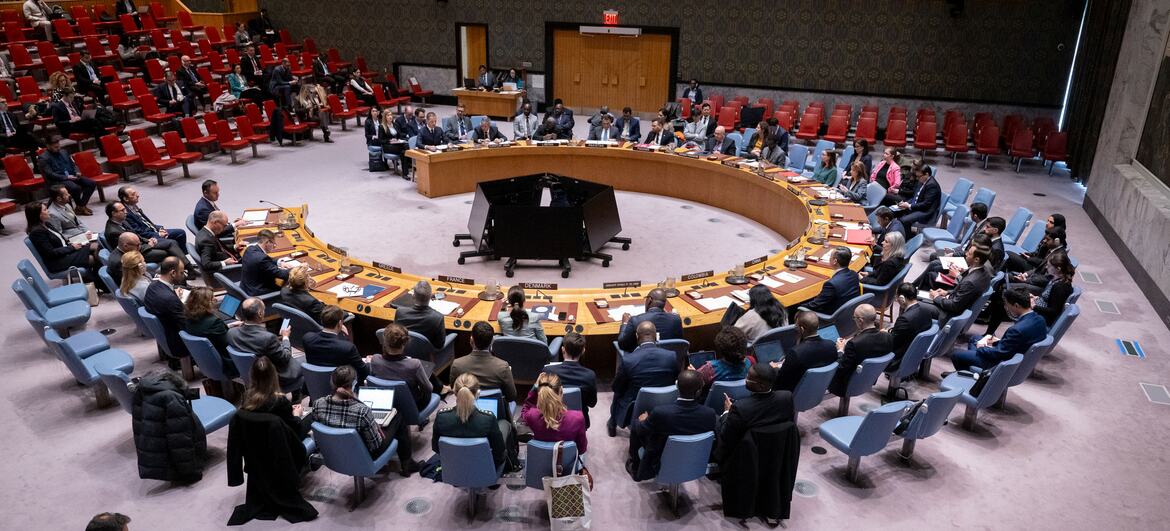
NEW YORK, July 13 (IPS) - As the United Nations (UN) Security Council prepares for its first round of closed-door straw polls this month to select the tenth Secretary-General, the organization stands at a critical crossroads. Multilateralism is fracturing under geopolitical gridlock, and the UN is battling a severe budgetary deficit driven by funding cuts.
Yet the gravest threat to the institution is not financial; it is cultural. To regain the trust of the global public, the UN urgently needs a radical transformation of its organizational culture, beginning with the selection of candidates for its highest office—the post of UN Secretary-General. This requires dismantling entrenched nepotism, cronyism, patronage, and quid pro quo practices in recruitment, promotion and appointment, and replacing them with a culture grounded in merit, integrity, transparency, and gender equity.
Patronage Becomes Institutional Norm
The history of the Secretary-Generalship and senior leadership is marked by allegations and documented cases of favouritism that have undermined the UN’s professed values of merit and equity. During the tenure of former Secretary-General Ban Ki-moon, concerns were raised about the employment of his son-in-law within the UN system, prompting debate over perceived favouritism, though the appointment was defended on merit grounds. Under Kofi Annan, the Oil-for-Food Programme scandal exposed widespread corruption, bribery, and serious administrative failures.
Such controversies are not confined to the highest levels of leadership. Allegations of politicized staffing and patronage have periodically surfaced across the UN system, highlighting a persistent gap between the organization’s principles and internal realities.
What begins as an exception at the executive level can become embedded practice throughout UN agencies and departments. Mid-level managers often replicate these patterns by shaping job descriptions, tailoring interview panels, sharing interview materials, and influencing or “fixing” vacancies for preferred candidates. In such an environment, backdoor recruitment risks becoming normalized rather than exceptional.
The result is a damaging paradox: while the UN publicly champions fairness, equal opportunity, and transparency, its internal systems often operate through favoritism, personal connections, and exclusion. Talented staff without access to influential networks face limited advancement, while better-connected but less qualified individuals may benefit from patronage, eroding institutional credibility, staff morale, and public trust.
The 2026 Secretary-General Race Under Scrutiny
Even in the current selection process for the next Secretary-General, concerns about institutional fairness persist. Accountability investigations by independentwatchdog groups have raised questions about the presence of family members of candidate Rafael Grossi, Director General of the IAEA, across Vienna- and Rome-based UN agencies. By contrast, candidates such as Michelle Bachelet, Rebeca Grynspan, and María Fernanda Espinosa bring extensive records in multilateral governance and international leadership, with no publicly substantiated findings of comparable family-based appointments during their UN service.
Concerns have also emerged regarding unequal institutional advantages during the selection process. Rebeca Grynspan stepped aside from her role as Secretary-General of UNCTAD in line with General Assembly Resolution 79/327, which encourages candidates holding UN positions to suspend their duties during campaigns to avoid conflicts of interest and undue advantage. Rafael Grossi has remained in office as Director General of the IAEA while pursuing his candidacy.
Critics argue that continued access to institutional visibility and resources may create an incumbency advantage. Whether or not this violates formal rules, it raises broader concerns about fairness and structural imbalance in leadership selection.
The UN’s Persistent Gender Gap
Beyond nepotism and back-door recruitment, the most glaring failure of this selection cycle is the UN’s inability to break its own highest glass ceiling. In over 80 years and nine Secretary-Generals, the organization has never been led by a woman. This persists despite years of relentless, highly coordinated global campaigns by civil society groups, advocates, and the 1 for 8 Billion coalition calling for gender-balanced leadership.
Despite decades of calls for historical justice and General Assembly Resolution 79/327—which notes with regret that no woman has ever held the position of Secretary-General and urges Member States to strongly consider nominating women, two men—Rafael Grossi and Macky Sall—were still nominated to such a narrow and exclusive candidate pool. At a time when women are leading nations and global institutions through major crises, this outcome highlights a gap between the commitments of Member States and their practice. It risks reinforcing the very inequalities the United Nations has pledged to address.
Reform in the UN Cannot Wait
The next Secretary-General must treat institutional integrity as a priority long before taking office—indeed, even before announcing a candidacy. Member States must translate long-standing reform commitments into enforceable mandates. These reforms can no longer remain aspirational; they must become immediate requirements shaping how the UN governs, recruits, and leads.
- Prioritizing a Female Leader to Break the Status Quo: Member States—and especially the five permanent Security Council members with veto power—must recognize that meaningful reform requires breaking entrenched networks of power and patronage. Electing the first female Secretary General in 2026 would signal a decisive shift toward aligning leadership with the principles of equality the UN promotes globally.
- Mandatory Campaign Step-Aside Rules: Any active UN official seeking the post of Secretary General should be required to suspend all institutional duties upon declaring candidacy. This would eliminate even the perception of using institutional platforms, influence, or resources for campaigning.
- Ban on Family Appointments: The UN system should adopt a strict policy prohibiting the hiring, consulting, or internship of immediate family members of any Assistant Secretary-General, Under-Secretary-General, agency chief, and Secretary-General candidate. The international civil service must never be treated as a family business.
- Preventing Post-Fixing and Backdoor Recruitment: The Secretary-General’s Office should be empowered to independently review recruitment and selection decisions across the UN system and investigate credible evidence of favoritism, cronyism, or reciprocal patronage. All appointments must follow transparent, merit-based procedures that withstand internal and public scrutiny.
Restoring Institutional Credibility
The world does not need a Secretary-General who merely manages bureaucracy; it needs one who restores moral authority to a fractured international order.
If the next Secretary-General is selected through informal bargaining, backroom deals, entrenched patronage, or continued exclusion of women, the UN risks deepening its legitimacy crisis and accelerating its decline in global relevance.
The UN must first reform itself: break the highest glass ceiling in its history, dismantle entrenched systems of patronage, open its selection process to genuine transparency and scrutiny, and ensure that its leadership reflects the principles and values enshrined in the UN Charter.
The transformation must begin now, starting with this month’s straw polls in the UN Security Council for the Secretary-General selection.
Shihana Mohamed, a Sri Lankan national, is the President of Asia Global Network (www.AsiaGlobalForum.org) and a US Public Voices Fellow on advancing the rights of women and girls. She is the founder of the UN Asia Network for Diversity & Inclusion (www.UN-ANDI.org) and is a strong advocate for gender equality and the advancement of women. She served at the UN for over 25 years.
IPS UN Bureau
© Inter Press Service (20260713044544) — All Rights Reserved. Original source: Inter Press Service