

From Clothing to Smartphones: The Taliban’s Control Over Young Men
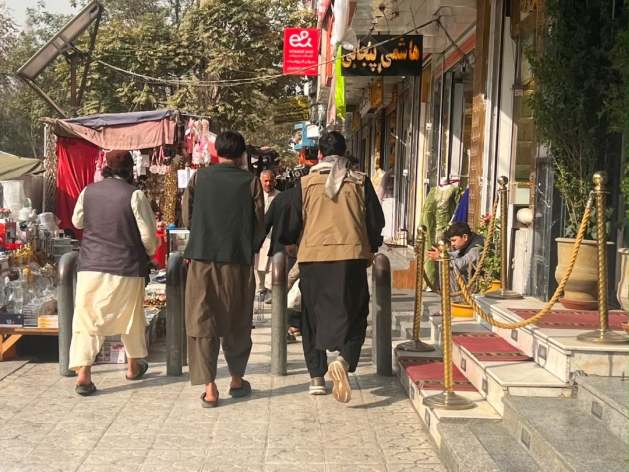
KABUL, November 27 (IPS) - In Afghanistan, women have been stripped of all their rights, but young men are also closely monitored outside the home. Even minor infractions can lead to punishment, whether for keeping family photos on a phone, a T-shirt, or wearing a necklace.
The Taliban constantly monitor even the smallest details of young Afghans’ lives. Any item of clothing or sign of personal style can lead to interrogations and punishments for violating Taliban rules. Mobile phone inspections have become a daily occurrence.
The restrictions affect women, but men too live in an invisible cage. Constant fear has replaced dreams of the future. The pressure and surveillance have increased anxiety and depression among young people.
Four young men now share their experiences in Kabul.
When Personal Style Becomes a Punishable Offense
Farid (name changed), 27, lives in the Khushhal Khan district of Kabul. He studied economics at the university and, after graduating, went to work for a private company.
Farid sighs as he recalls examples of how the Taliban’s morality police have treated him over the past five years.
“I went to the grocery store wearing a T-shirt and trousers — simple, ordinary clothes. I wear them often, just like the perahan tunban (a traditional loose-fitting Afghan garment). My body was otherwise covered, but the T-shirt had short sleeves.”
On the street, the Taliban’s morality police stopped Farid and began beating him.
“They said my clothes were not in accordance with Islam and that I should wear a perahan tunban. ‘You’re a Muslim man, but you’re wearing childish clothes like that,’ they shouted.”
A large crowd gathered at the scene. Farid feared he would be beaten or forced to join the Taliban, so in the end he promised to stop wearing the clothes he had on.
In Farid’s view, however, wearing a T-shirt and trousers does not make him any less of a Muslim.
“In my opinion, there was nothing wrong with my clothes. I still don’t understand what kind of Islamic clothing we’re supposed to wear for it to be acceptable to them.”
Since the incident, he has changed his style of dress.
“My right to choose what I wear has been taken away from me. I no longer dare to wear anything other than the traditional perahan tunban. I don’t want to find myself in a situation again where people judge whether I’m a Muslim or not based on my clothes.”
Taliban Restrictions Extend to Digital Privacy
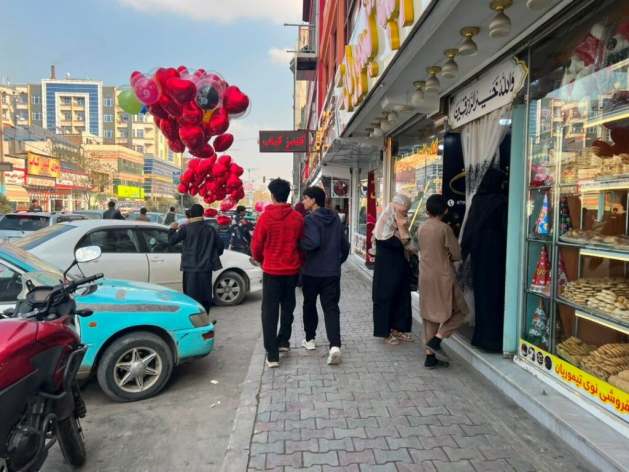
Many young people fear that the Taliban will stop them on the street and search their phones. The Taliban look for photos, messages, contacts, apps, or other activity on the phones that the regime considers corrupt or Western.
Hamid (name changed), 23, is an engineering student at the University of Kabul. He lives in the Taiman district. His phone is part of his everyday life. He uses it to stay in touch with his family and friends, save photos and messages, and use various apps.
However, his views on using his phone outside the home have changed.
“I was on my way home when someone suddenly shouted behind me, ‘Stop!’ Two Taliban members asked where I was going and where I was coming from. I told them I was on my way home from the university. They ordered me to hand over my phone.”
The men began searching through Hamid’s phone, looking at his photos, messages, contacts, and apps. They asked why he had a foreign app on his phone.
What was most disturbing was that the Taliban men opened the phone’s photo gallery and saw pictures of Hamid’s mother and sister.
“They started berating me: ‘You shameless man, who are these women? Why do you have their photos on your phone?’ I replied that they were my mother and sister. ‘You have no shame or honor keeping these photos on your phone. Delete them immediately,’ they shouted.”
The Taliban also searched through the contacts on Hamid’s phone. Whenever they found a foreign number, they interrogated Hamid.
“I had two American phone numbers that belonged to my uncle and his son. They forced me to call them.”
The experience changed the way Hamid uses his phone. He now knows that any private matter on his phone could lead to trouble. His phone used to be an everyday tool for him; now it has become a source of fear.
“Now it feels like I have no privacy left. The Taliban can go through my phone and my photos and investigate everything.”
He has also instructed his siblings not to take their phones with them when they go out.
“We no longer use smartphones when we go out; instead, we use simple Nokia models. We only use our phones to stay in touch with our family.”
Abdul (name changed), 28, is a merchant. He had been planning his wedding day for a long time and was looking forward to a happy day with his friends, family, and relatives.
The arrival of the Taliban changed everything.
“Music was playing at my wedding reception when a group of morality police arrived and started shouting. They frightened the wedding guests, smashed the speakers, and took me away.”
The police held Abdul in custody for several hours. Meanwhile, his own wedding continued without him.
He was eventually released after the village elders intervened and paid a ransom for him. By the time he was finally able to return to the wedding, the atmosphere had changed.
The day that was supposed to be the happy beginning of his married life turned into a painful memory. When Abdul thinks back on his wedding now, fear comes to mind, not joy.
“I curse this country. Here, neither the young nor the old see a single happy day”.
Naser (name changed), 22, lives in the Barchin area and works at a stationery store. He dresses well and follows fashion. Now, however, he says the Taliban have taken away his desire to look stylish.
When Naser was walking down the street wearing a silver chain around his neck, the Taliban’s morality police came and yanked the chain off, leaving a wound on his neck. In the Taliban’s view, the chain was a sign of corruption. Naser was also threatened with punishment if he did not remove a small tattoo from his hand.
“Nothing matters to these people. To the Taliban, purity, neatness, and following fashion are all sins. But for heaven’s sake, we’re young! If we do not enjoy fashion now, when will we?”
© Inter Press Service (20261127124957) — All Rights Reserved. Original source: Inter Press Service