News headlines
Cleaning Up the Fields: Across Africa and Asia GEF is Helping Farmers Rewrite Their Pesticide Story
- Inter Press Service

LILONGWE & VIENTIANE, May 7 (IPS) - For decades, pesticides have been a quiet pillar of Malawi’s agriculture, guarding crops against pests, improving yields, and sustaining millions of livelihoods. But beneath this success story lay a troubling reality: weak regulation, unsafe handling practices, and growing threats to human health and the environment.
Why it is Time to Rewrite Africa’s Malaria Story
- Inter Press Service

NEW YORK, May 7 (IPS) - If you woke up with severe fever, would you stay home from work? What if the choice meant losing a week’s wages, or deciding if you could afford the trip to a doctor at all?
Data Gaps are Hiding the Most Excluded Children
- Inter Press Service

DOHA, Qatar, May 7 (IPS) - In 2024, 273 million children, adolescents, and youth were out of school globally as per the UNESCO Institute for Statistics. While that is a staggering number, the figure is incomplete. The 2026 Global Education Monitoring report warns that the global out of school population may be undercounted by at least 13 million once humanitarian sources are used to correct data gaps in conflict-affected contexts.
Breaking the Cycle Between Food Production and Environmental Decline
- Inter Press Service

URBANA, Illinois, US, May 6 (IPS) - A newly published review in Nature Reviews Earth & Environment has revealed disturbing statistics on the growing environmental threats posed by global food production. The global food system, designed to feed and nourish humanity, is now a major contributor to climate change via greenhouse gas emissions, and the largest driver of freshwater depletion, biodiversityloss, and nutrient pollution.
Keep Inputs Moving to Keep Food Affordable
- Inter Press Service

ROME, May 6 (IPS) - Across Europe, winter wheat is already in the ground. What farmers apply in the coming weeks will determine the size of this year’s harvest. Those decisions are now being made under a sudden surge in costs that did not exist when seeds went in.
VENEZUELA: ‘The Credit Goes to Detainees’ Families, Human Rights Organisations and the International Community’
- Inter Press Service

CIVICUS discusses the status of political prisoners in Venezuela with Manuel Virgüez, director of Movimiento Vinotinto, a Venezuelan human rights organisation that works for citizen empowerment, democracy and justice.
Strengthening Financial Integrity: Why It Matters and What Needs to Change
- Inter Press Service

WASHINGTON DC / OSLO, May 6 (IPS) - A conversation with Toril-Iren Pedersen, Director of the UNDP Global Policy Centre for Governance, and Michael Jarvis, Executive Director of the Trust, Accountability, and Inclusion (TAI) Collaborative
How Santa Marta Finally Made Fossil Fuel Phase-Out Politically Discussable
- Inter Press Service

SRINAGAR, India, May 6 (IPS) - The First Conference on Transitioning Away from Fossil Fuels in Santa Marta, Colombia, may eventually be remembered as a defining moment in global climate politics, not because it produced a treaty or a formal negotiation outcome, but because it changed the tone, structure, and ambition of the conversation itself.
UN mourns CNN founder Ted Turner, a ‘tireless champion for our common humanity’
- UN News
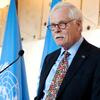
The American businessman, media mogul and philanthropist Ted Turner is being remembered by the United Nations for his long-standing support for the Organization and its values.
More than 70 civilians killed in Ukraine in less than a week
- UN News
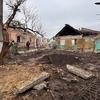
At least 70 civilians have been killed and more than 500 injured across Ukraine since the start of May, UN human rights monitors said on Wednesday, as waves of attacks hit cities across the country and humanitarian workers struggled to reach communities near the frontline.
Powered by