From Barriers to Bridges: Transformation of the Kenya-Ethiopia Border Region
NAIROBI, Kenya, Mar 17 (IPS) - Consider this. The communities around the Kenya-Ethiopia border in Moyale-Borona area, have long been associated with internecine violence, extreme poverty, and environmental stress. These have led to disastrous societal consequences, including displacement, criminality and violent extremism.
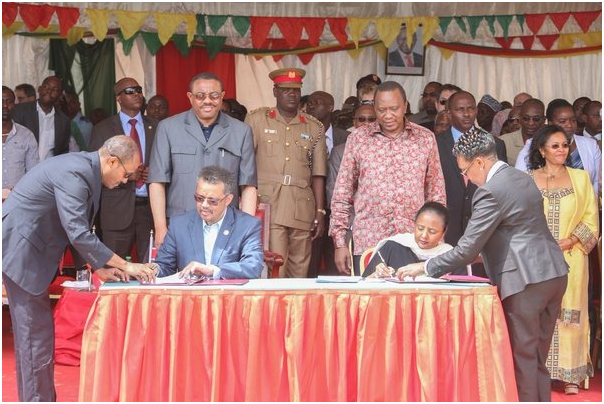
However, an innovative, comprehensive and integrated cross-border programme initiated by the Kenyan and Ethiopian governments, in partnership with the Intergovernmental Authority on Development (IGAD) and the United Nations (UN) is changing this narrative.
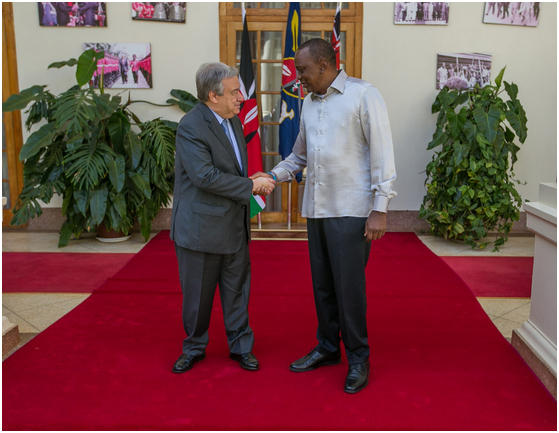
During the recent visit to Kenya by the UN Secretary-General, António Guterres, President Uhuru Kenyatta specifically mentioned, the Kenya-Ethiopia cross-border programme and noted the importance of this innovative area-based development programme, which he said has the potential of being replicated elsewhere.
President Kenyatta hoped that the initiative would help transform the region. "The programme will see Moyale being turned into the Dubai of Africa," he said.
The strong commitment of the two governments is reflected in an article the Foreign Ministers of Kenya and Ethiopia, co-authored. Kenya and Ethiopia: A cross-border initiative to advance peace and development.
The European Union Ambassador to Kenya, Dr Stefano Dejak remarked, "I am seeing positive signs of change and therefore the European Union has decided to partner with the UN and IGAD, to expand the cross-border programme to include Mandera Triangle (Kenya-Ethiopia-Somalia), the Omo (Kenya-South Sudan) and Karamoja (Kenya-Uganda) clusters".
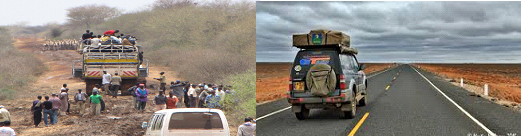
Devolution has also empowered local authorities and communities, and has contributed to poverty reduction and effective service delivery in Marsabit County. The Isiolo-Merille-Marsabit-Moyale road, is now complete; and it will be a transformational as it will link the region to Ethiopia, the second most populous country in Africa, and promote cross-border trade. In addition, this completes the Trans-Africa highway linking South Africa to Egypt.
The UN is collaborating with development partners to tap this enormous potential to reduce poverty and spur development in various ways. This will especially benefit women who are significantly involved in cross-border trade. The UN will soon launch a "HeforShe" initiative/campaign to empower women and address the problem of gender inequality, and enhance women's participation in the development process in both regions.
Studies carried out, in collaboration with the communities, are helping to understand the causes, drivers, dynamics and impacts of conflict in the cross-border areas, and possible factors or stakeholders that could contribute to sustainable peace in the region. This is an important parameter of the African Union vision on peace and security in the first plan of action under the progressive Agenda 2063.
Though integration and trade along the border is still in nascent stages, there is reason for optimism that it will have long-term positive macroeconomic and social ramifications such as food security and income generation, particularly for populations who would otherwise suffer from social exclusion.
Ms Ruth Kagia, in the Office of the President of Kenya who coordinates the programme says, "This initiative if properly executed may well be a game changer by turning cross border barriers into bridges of opportunity. Especially among the marginalized and poor communities to expedite the achievement of a core goal of the SDGs and ending poverty by 2030".
© Inter Press Service (2017) — All Rights Reserved. Original source: Inter Press Service
Where next?
Browse related news topics:
- Trade, Economy, & Related Issues
- Causes of Poverty
- Third World Debt Undermines Development
- Free Trade and Globalization
- Arms Control
- Arms Trade—a major cause of suffering
- Conflicts in Africa
- International Criminal Court
- Consumption and Consumerism
- Sustainable Development
- G8: Too Much Power?
- Food and Agriculture Issues
- Global Financial Crisis
Read the latest news stories:
- The Mideast Conflict Spreads—Beyond the Strait of Hormuz & towards the UN Cafeteria Friday, May 08, 2026
- Cleaning Up the Fields: Across Africa and Asia GEF is Helping Farmers Rewrite Their Pesticide Story Thursday, May 07, 2026
- Why it is Time to Rewrite Africa’s Malaria Story Thursday, May 07, 2026
- Data Gaps are Hiding the Most Excluded Children Thursday, May 07, 2026
- Bahrain and US float Security Council resolution on the Strait of Hormuz Thursday, May 07, 2026
- Oil, plastics and climate: Why higher prices could speed a materials transition Thursday, May 07, 2026
- World News in Brief: Somalia drought response, Gaza and Ukraine aid updates, human rights abuses in Tunisia Thursday, May 07, 2026
- Lebanon: Fresh strike on Beirut suburbs ‘a very alarming development’ Thursday, May 07, 2026
- Countries make progress on migration pact, but more work remains Thursday, May 07, 2026
- Hantavirus outbreak on cruise ship not ‘another COVID’, WHO says Thursday, May 07, 2026
Learn more about the related issues:
- Trade, Economy, & Related Issues
- Causes of Poverty
- Third World Debt Undermines Development
- Free Trade and Globalization
- Arms Control
- Arms Trade—a major cause of suffering
- Conflicts in Africa
- International Criminal Court
- Consumption and Consumerism
- Sustainable Development
- G8: Too Much Power?
- Food and Agriculture Issues
- Global Financial Crisis
Share this
Bookmark or share this with others using some popular social bookmarking web sites:
 Bluesky