

World News in Brief: Myanmar amnesty, rising needs in Afghanistan, another power loss at Ukraine nuclear plant

Authorities in Myanmar released the country’s ousted president from prison on Friday, along with some 4,000 other people, as part of an amnesty to mark the traditional New Year festival.
President Win Myint had been in jail since February 2021 when the military overthrew Myanmar’s democratically elected government in a coup, which sparked nationwide protests and subsequent armed resistance movements across the country.
Other senior officials, including State Counsellor Aung San Suu Kyi, remain behind bars.
Release all detainees: Guterres
In response to the developments, UN Secretary-General António Guterres highlighted the need to continue to find a resolution to the crisis in Myanmar.
“The Secretary-General takes note of the announcement of amnesty, including the release of prisoners, reductions of sentences and commuting death penalties to life imprisonment, and the news about the release of President Win Myint,” UN Spokesperson Stéphane Dujarric said in a note to journalists.
“He underscores the need for meaningful efforts to ensure the swift release of all those arbitrarily detained, including State Counsellor Daw Aung San Suu Kyi, and to create conditions conducive to a credible political process.”
The Secretary-General further encouraged continued dialogue between all relevant stakeholders and his Special Envoy, Julie Bishop, on how the UN alongside regional bloc ASEAN and other partners “can help support efforts towards a peaceful solution in the interests of the people of Myanmar as called for by the Security Council and General Assembly.”
Rights chief ‘relieved’
The UN High Commissioner for Human Rights welcomed Friday’s news.
Volker Turk tweeted that he was “relieved” by the long overdue release of President Win Myint and other prisoners, as well as the commutation of death sentences.
“All those detained unjustly since the coup – including State Counsellor Aung San Suu Kyi – need to be released immediately and unconditionally,” he said. “There must be an end to the unrelenting violence against all of Myanmar’s people.”
Afghanistan: Thousands displaced in cross-border clashes with Pakistan
Humanitarians continue to warn of rising needs in Afghanistan following cross-border hostilities with Pakistan that began in late February.
More than 94,000 people across six provinces have been displaced, according to the UN aid coordination office OCHA. Some 160,000 people are going hungry and around 90,000 people have reduced access to health services.
The fighting—including shelling, airstrikes and clashes—has damaged or destroyed homes, health facilities, schools and other civilian infrastructure.
Humanitarian operations have also been hindered, while explosive hazards remain a threat, with hundreds of civilian casualties reported.
This week, shelling killed one person in Afghanistan and three in Pakistan.
Another school in Kunar province in northeastern Afghanistan was struck on Wednesday and severely damaged, according to aid partners, but no casualties were reported.
OCHA noted that although the main supply road between two districts in Kunar and neighbouring Nuristan province reopened on Monday after being closed for two months, UN missions remain suspended due to security concerns.
Border crossings between Afghanistan and Pakistan also largely remain closed.
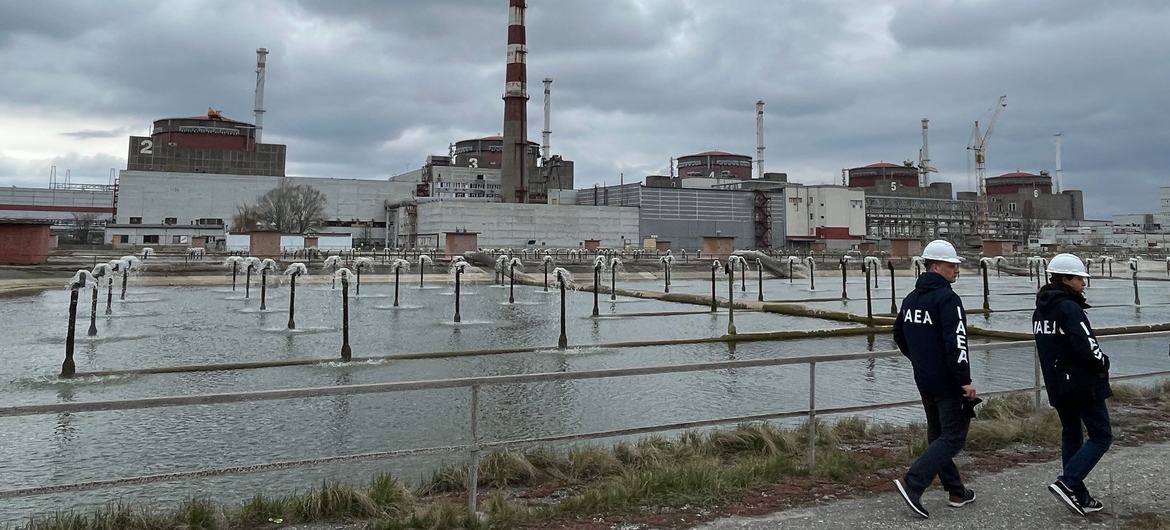
Ukraine: Repeated power losses at nuclear plant
The Zaporizhzhya Nuclear Power Plant (ZNPP) in Ukraine lost all off-site power twice this week, intensifying concerns over nuclear safety as fighting continues, the International Atomic Energy Agency (IAEA) said on Friday.
The outages occurred after the plant’s last remaining external power line was disconnected, forcing operators to rely on emergency diesel generators to maintain critical safety systems.
This marked the 14th time that all off-site power has been lost at the plant since Russia launched its full-scale invasion more than four years ago.
“The repeated losses of external power once again highlight the vulnerability of the ZNPP amid the ongoing conflict and the persistent risks to nuclear safety and security,” said Rafael Mariano Grossi, the IAEA Director General.
The main 750 kV Dniprovska power line, which previously supplied the plant, has been offline since 24 March, leaving the facility dependent on a single 330 kV backup line which has failed twice in recent days.
IAEA experts stationed at the plant are continuing to monitor the situation and are awaiting the results of an internal investigation into the incidents.
© UN News (2026) — All Rights Reserved. Original source: UN News