

FRANCE: ‘The Government Should Learn to Respect Its People, Listen to Them and Consult Them’
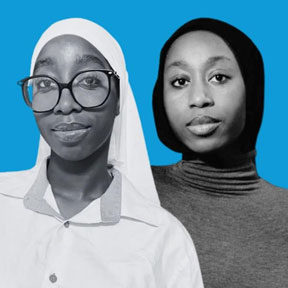
CIVICUS discusses France’s student protest movement with Aminata and Mariam Touré, two sisters involved in the protests. Aminata is a member of the Popular Youth Front (Front de la Jeunesse Populaire), a collective of young people from working-class neighbourhoods.
Weeks of protests led by secondary school students have swept France, triggered by underfunded public services and limited opportunities. The wave forms part of a broader global series of recent protests, often led by members of Gen Z, sparked by everyday economic concerns and a rejection of the political establishment. On 17 October, some 550,000 people protested, according to official figures, but the day descended into the worst violence seen in years. Human rights groups have also documented extensive police brutality, including against children.
Why did you decide to take action?
In our secondary schools, we have holes in the walls, missing chairs, toilets without doors, overcrowded classrooms and absent teachers. Students completing secondary education also face constant pressure from Parcoursup, the national higher education admissions platform.
During the last heatwave, in Saint-Denis, in the northern suburbs of Paris, pupils fainted during their exams because there was no air conditioning and it was too hot in the exam halls. Pupils who were ill were forced to attend lessons, as these were the only days when teachers were present. With no school nurses on hand, they were unaware they were contagious and passed viruses on to each other.
These catastrophic situations only affect poor regions, rural areas and France’s overseas territories, which are even poorer. You never hear about this in central Paris, where the government concentrates its budget. A parliamentary report has shown that the state spends less per pupil in Seine-Saint-Denis than elsewhere. The result is that every child there loses, on average, the equivalent of a whole year’s schooling over the course of their education. For the start of the 2024 school year, the Seine-Saint-Denis inter-union group estimated there was a shortfall of 5,000 teachers, 2,200 support staff for pupils with disabilities and 175 senior education advisers. This is effectively a two-tier education system.
We’ve been raising these issues with our head teachers, but the government is doing nothing, apart from passing pointless laws. Blocking access to our schools was the only way to make ourselves heard. Thanks to that, we’re now the focus of national and global attention.
How did the movement spread?
The blockades began as early as 31 August in overseas territories. It’s just that, due to media censorship, we always find out too late. The movement then spread to Créteil, in the Paris suburbs, and then to other working-class areas of the Île-de-France region, notably Essonne, Hauts-de-Seine, Seine-Saint-Denis and Val-de-Marne.
At first, everyone blockaded their own school. Then, solidarity among school pupils and support from trade unions brought us together on the streets for a common cause. School and student unions, and the General Confederation of Labour, one of France’s main trade union confederations, helped organise the protests and put forward our demands. Other movements joined us, including the gilets jaunes, the social protest movement that emerged in 2018. This solidarity proved decisive for each and every one of us.
Faced with the state’s contempt, the movement went national. Even privileged young people became aware of their educational privileges and the need to draw attention to this inhumane situation. The media have shown this. Attention paid to the blockades increased tenfold when students also blockaded elite institutions such as the University of Assas, the Catholic Institute of Paris and the Parisian secondary schools Louis-le-Grand and Montaigne.
What are your concerns about the national budget?
We are calling for more funding for education. The government is investing heavily in defence. The defence budget has risen from €32.2 billion (approx. US$34.8 billion) in 2017 to almost €54 billion (approx. US$58.3 billion) in 2026, and is set to reach €64 billion (approx. US$69.1 billion) in 2027. It will have almost doubled in a decade. But for education, the government is content with a mere increase of €200 million (approx. US$216 million) in 2026, while cutting thousands of jobs. This is not investment. It is a publicity stunt.
At the same time, the government is increasing pressure on people while easing the burden on big business. Life is becoming increasingly difficult. All the movements agree on one point: we must invest in education. However, the government continues to arm the police on a massive scale while depriving the education sector of the resources it needs to function.
How do you respond to the looting and violence of 17 October?
We are against all violence, whether it comes from the police or protesters. Looting is regrettable, but it is even more regrettable that greater importance is attached to insured shops than to people who lose a limb or the use of a sense. As a citizen, when I see a young person who has looted a shop receiving a harsher sentence than a man convicted of raping his daughter, my anger redoubles.
The state’s response is so violent that it unfortunately drives some people to loot even more, as this is the only time when anyone looks at you or listens to you. But these excesses backfire on us. The media use them to stifle our demands, which diverts attention from our struggles and weakens the movement.
The movement is torn between those who seem to want revolution and those who want peace, but one cannot exist without the other. Our history books teach us that all France’s great advances have stemmed from revolts, destruction and riots. We don’t find these tools in some shadowy online network or from belligerent leaders. We find them in our textbooks. Nevertheless, like the majority of protesters, we will continue to mobilise peacefully until the government listens to us.
How do you view the police response?
It’s a disgrace. We feel as though we’re at war. Police officers hit, shove, insult and threaten us. One slogan has appeared on several placards, referring to the police’s riot units: ‘We send out SOS signals, we get the CRS instead’. That’s where we’re at. Trust in the authorities was never as low as it has been since the protests began.
These aren’t isolated incidents. It’s a doctrine. Since the gilets jaunes protests, the French approach to policing has been documented as one of Europe’s most brutal. Activist groups have recorded around 20 protesters who have lost an eye and several who have lost a hand, and in Marseille, a local, Zineb Redouane, died after being hit by a teargas canister.
Violence isn’t limited to blows with batons. On 17 October, I was on my period, and I was doused with teargas for no reason, while my friends and I were helping unprotected people, many of them tourists, with saline solution and milk. The next day, I felt excruciating pain in my stomach. I then discovered that many women exposed to teargas report menstrual cycle disturbances.
We are living in an authoritarian state, where violence reigns and the social contract has been broken. The most severe violence is that perpetrated by the state, because it’s supposed to protect us and be legitimate. Yet it maims us without a shred of empathy.
How do you view the president’s reaction?
President Emmanuel Macron’s speech following the protests was shameful, despicable and deeply disrespectful. When he demands we choose sides, then singles out the left as responsible, he shows that he’s not listening to us. Asking us to choose sides ignores the fact that we don’t want to be on his side. Pointing the finger at so-called culprits shows that he fails to grasp the extent of the damage he has caused and continues to cause.
In 2017, Macron was elected by claiming to speak for the people. Two years later, he introduced a series of measures that harmed workers. We see this even in housing policy. Cuts are being made to housing for poor people while multinationals get richer. This is a political choice.
The government should learn to respect its people, listen to them and consult them. We expect it to take action to improve conditions in secondary schools and for our views to be taken into account, because it’s our future’ at stake.
What impact do you hope to have on the 2027 presidential election?
We hope the candidates will talk more about the problems facing young people and propose tangible solutions. We want to show that secondary school pupils, too, can make their voices heard and that they must not be ignored simply because they are young. I hope all French people will be taken into account in the debates, and that we will stop talking about Islam and migrants and focus more on precarious living conditions, dignity and security. I won’t be able to vote, as I’ll still be 17. It will also be a chance to see whether those who do vote realise that their voice matters, both for them and for us.
In 2024, Macron dissolved the National Assembly following the victory of the far-right National Rally in the European elections. Then, even though the left came out on top in the snap general election, he appointed a right-wing government.
In the wake of the dissolution, we formed the Popular Youth Front, a collective rooted in working-class neighbourhoods, to put voting back at the heart of people’s concerns, as abstention rates are extremely high in those neighbourhoods. Our open letter was signed by over 6,000 young people from working-class neighbourhoods and rural areas. But it’s clear we must fight both against the far right, which is not yet in power, and against the government.
What the world sees as a spontaneous revolt by Gen Z is anything but spontaneous. These are exactly the demands we were putting forward in working-class neighbourhoods two years ago. This uprising is the predictable result of a slow, bipartisan abandonment of working-class and racialised young people. This abandonment is not the work of the far right that everyone fears, but of the centre that claims to be blocking its advance. The proof lies in its response. A government that responds to children with teargas and calls this ‘urban violence’ has already adopted the authoritarian reflex it claims to be protecting our country against.
CIVICUS interviews a wide range of civil society activists, experts and leaders to gather diverse perspectives on civil society action and current issues for publication on its CIVICUS Lens platform. The views expressed in interviews are the interviewees’ and do not necessarily reflect those of CIVICUS. Publication does not imply endorsement of interviewees or the organisations they represent.
One of those featured and photographed in this article is a minor. She appears with her parents’ consent, which was obtained in writing prior to the interview. Her name and all details that could identify her are included with her permission, as reconfirmed at every stage of the publication process.
GET IN TOUCH
Instagram
Mariam Touré/Instagram
SEE ALSO
Gen Z protests: new resistance rises CIVICUS | State of Civil Society Report 2026
France’s student protests: a new generation demands respect CIVICUS Lens 23.Oct.2026
India’s young people find their voice CIVICUS Lens 07.Aug.2026



© Inter Press Service (20261111112059) — All Rights Reserved. Original source: Inter Press Service