

KENYA: ‘I Tell the Stories of People Who Can’t Go on Stage to Perform Their Struggles’
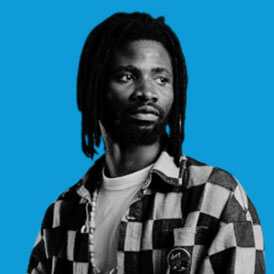
CIVICUS discusses artivism and civic space in Kenya with Brian Silweyz, a spoken-word artist and human rights defender who uses poetry to campaign for accountability and social justice.
The Kenyan government’s crackdown on dissent shows no sign of easing. On 25 June, two years after youth-led protests forced the government to withdraw a Finance Bill that would have raised taxes on everyday items, police blocked roads and arrested over 350 people. Police beat six protesters they arrested and detained at a memorial march before dumping them in different parts of Nairobi. A police watchdog has counted at least 127 people killed during protests in 2024 and 2025, and abductions of critics continue. Artists have been at the heart of the protest movement, and some have been targeted for their work.
Why do you describe yourself as an artivist?
I’m an activist who uses art to champion human rights and a just society. I use poetry and performance to make complex social justice issues accessible, connect activists across borders and inspire young people to get involved.
My art isn’t feel-good music and I don’t perform to be praised. I tell the stories of people who can’t hold a pen or go on stage to perform their struggles. My work is built on three things: the story of me, the story of us and the story of now.
My poems come from real-life experiences, mine and other people’s, and show how these problems connect to the way we are governed. Many of them remember our fallen comrades, who were abducted, tortured or killed. In one, I ask how a police officer can stoop so low as to kill a secondary school student. It was inspired by a real case. Elijah Muthoka Mwongeli, a secondary school student in Machakos, was shot dead during protests in July 2025.
What led you to this work?
You can’t take people where you haven’t been. In Nakuru, I was profiled because of my dreadlocks. In September 2023, a week after I spoke out against police brutality on two local TV stations, six plainclothes police officers beat me in the street. They mocked me for being an activist and held me at Nakuru Central Police Station for nearly three hours, until fellow activists got me out. I was also failed by the education system. My parents couldn’t afford to send me to university, so after finishing secondary school I had to find a way to survive, and I chose art.
My experience of profiling is why I keep the conversation going. Bad governance has fed stereotypes about young people, and these stereotypes have led to more extrajudicial killings. If I’m profiled even though I’m a known artist, what happens to young people who aren’t? They get abducted, tortured and killed, and their stories go untold. So I tell what I go through and what I see others going through. If I don’t tell these stories, who will?
How do you take these stories to people?
Spoken word is my form of protest. As well as performing on stage, I go into matatus, Kenya’s shared minibuses, to take the message where it matters most. With my friend and fellow poet Willie Oeba, I do civic education on different matatu routes. We challenge passengers to elect better leaders, exercise their democratic rights and hold leaders accountable. Ahead of the 2027 general election, we have also been urging young people to register to vote. Passengers almost always respond well. They promise to vote wisely, and many join the discussion, as you can see in one of my recent performances.
Through poetry we start the conversation. We focus on changing the mindset of both rights holders and duty bearers.
What risks and obstacles do you face?
There’s backlash from the government, and bloggers threaten and attack us to downplay our work. During the protests in July 2024, unknown callers phoned me repeatedly. They told me to stop performing, claimed to know where I live and demanded 20,000 shillings (approx. US$150) for ‘protection’. I reported it to the police, who said they had passed the case to the Directorate of Criminal Investigations. I still have the police report number, but nothing has been done. We also filed a complaint with the Independent Policing Oversight Authority, and there has been no action there either.
The threats haven’t stopped. Unknown people still threaten me on my social media pages, and I have had to leave my home and move several times because I don’t know when they might attack me.
Other artists face the same pressure. In April 2025, police arrested former senator Cleophas Malala, who wrote a school play about young people’s struggle for good governance.
Some media have censored me too. Once, while I was performing live on KTN, the Kenyan television network, my microphone was switched off on air and the host told me to stop saying ‘enough’, as a way of silencing me.
Today the censorship continues on social media, where my content is being shadow-banned. It’s hard to find funding to keep producing, because many brands find my message too controversial to associate with.
What does solidarity mean to you?
All our struggles are connected. I’m not a woman, but I live with women – my mother and my sister – and I see the challenges they go through. In the same way, a woman poet can talk about the mental health struggles men face.
In September I took part in the fourth Activist Symposium in Maputo, Mozambique. This gave me the opportunity to meet frontline activists, human rights defenders, lawyers, researchers and grassroots organisations from across Africa. We discussed the challenges activists face in our countries, how to expand civic space and how to move forward. For me, it was also about inspiring hope in the next generation of activists. When young activists in Kenya see me taking part in a meeting like this, they know our work is being recognised beyond our borders.
CIVICUS interviews a wide range of civil society activists, experts and leaders to gather diverse perspectives on civil society action and current issues for publication on its CIVICUS Lens platform. The views expressed in interviews are the interviewees’ and do not necessarily reflect those of CIVICUS. Publication does not imply endorsement of interviewees or the organisations they represent.
GET IN TOUCH
Facebook
Instagram
TikTok
Twitter
YouTube
SEE ALSO
Kenya: ‘These days it feels like everyone is an activist’ CIVICUS Lens | Interview with Felix Kiprono 12.Jul.2026
Kenya: systemic violence meets brave resistance CIVICUS Lens 17.Jul.2025
Kenya’s shadow war on activism CIVICUS Lens 24.Jan.2025



© Inter Press Service (20261123183142) — All Rights Reserved. Original source: Inter Press Service