

COP31 Ends in Deadlock, Leaving Ethiopia To Pick up the Pieces
ANTALYA, Türkiye, November 23 (IPS) - There is no final cover decision at this year’s United Nations climate summit after countries did not agree on a text that explicitly mentions moving away from fossil fuels.
The deadlock, which has happened only once before, comes after a record 44 hours of overtime.
Several other issues, including climate science, energy policy and climate finance for developing nations, remain unresolved.
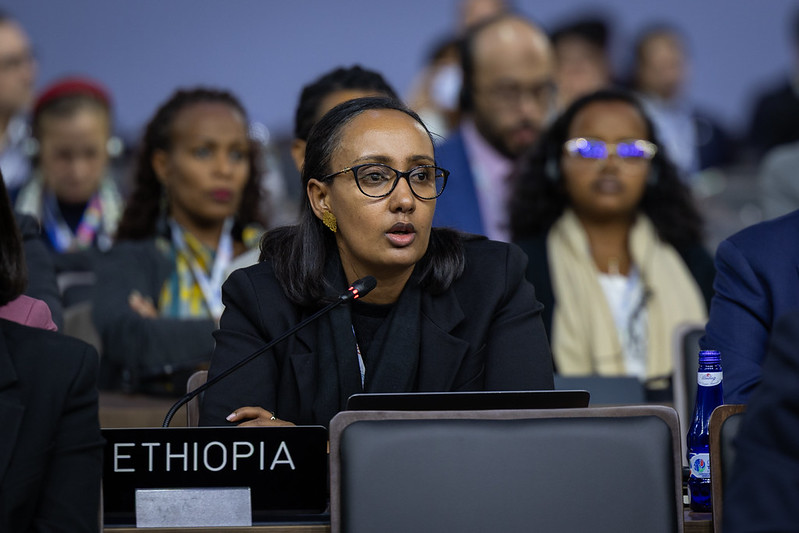
Ethiopia, which is hosting COP32 in Addis Ababa next year, must revive the talks and address the deep divisions sown in Antalya, Turkey.
This is a major setback not only for international climate diplomacy but also for Africa.
But the continent has made some progress, and it can use its hosting role next year to build on that momentum and push for stronger commitments on climate finance and adaptation.
Africa’s setbacks
Fossil Fuels
A major tension at the annual two-week conference was the move away from coal, oil and gas.
African negotiators and campaigners were pushing for a cover decision that explicitly mentions the transition away from fossil fuels.
But fossil fuel-dependent countries, like Saudi Arabia, pushed back, arguing that countries should retain flexibility in how they choose to reduce emissions.
Fossil fuels are the primary driver of the climate crisis.
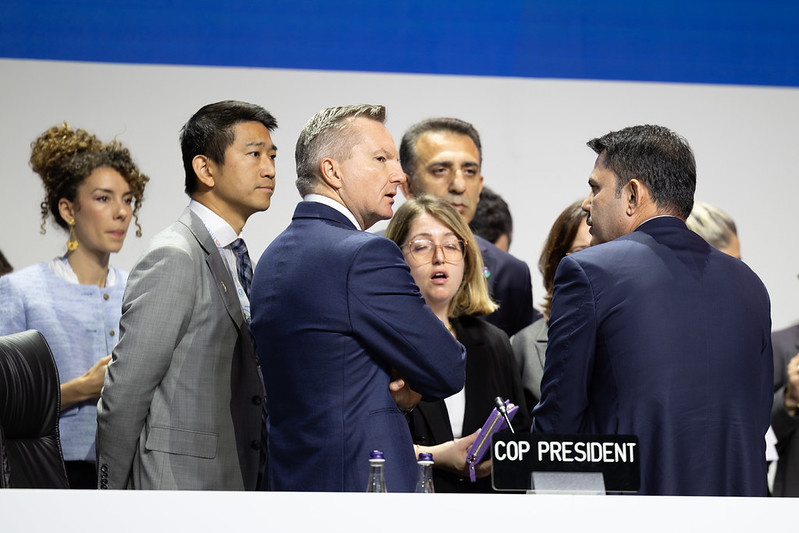
A cover decision, an agreement led by the COP31 President and Turkish Environment Minister Murat Kurum, summarises the summit’s political commitments and guides future climate action.
Kurum clashed with UN Climate Change Executive Secretary Simon Stiell during the closing plenary.
Stiell tried to intervene during proceedings, and Kurum asked him to go back to his seat.
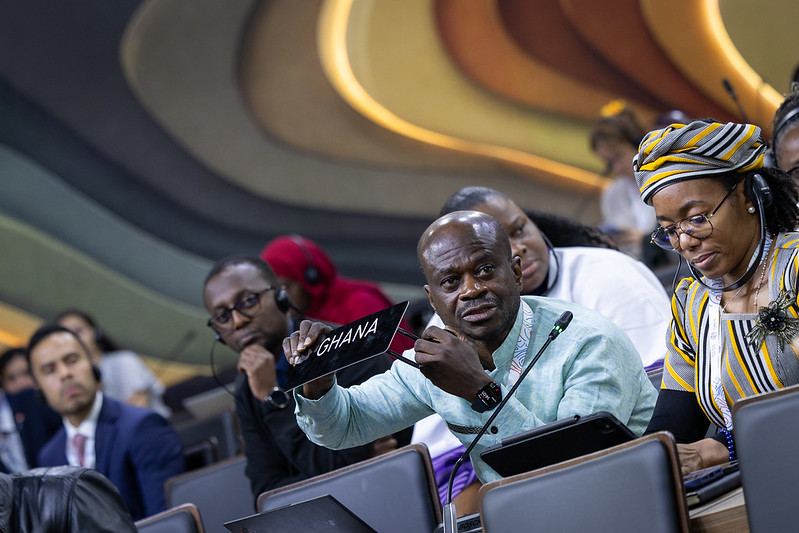
Kurum also clashed with Nana Dr Antwi-Boasiako Amoah, the Chair of the African Group of Negotiators (AGN), after the COP31 president interrupted Zanetor Agyeman-Rawlings, Ghana’s minister of environment, who was speaking on behalf of the African Group at the closing plenary.
Agyeman-Rawlings reiterated the need for an inclusive, transparent and respectful process in the international climate negotiations.
The European Union also rejected the cover decision.
Adaptation Finance
The AGN was pushing for adaptation finance at COP31. After Parties agreed to triple adaptation finance at COP30 in Belém, with a target year of 2035, African countries wanted the summit to agree on a baseline from which the figure is being tripled. But that is still not clear. If developed countries triple adaptation finance from the $40bn agreed at COP26 in Glasgow, they will provide $120bn annually by 2035.
This is important because African countries lose an average of 2% to 5% of their Gross Domestic Product (GDP) every year because of climate extremes. Yet governments in Africa spend up to 9% of their annual budgets on unplanned disaster relief and climate response.
Jiwoh Abdulai, Minister of Environment and Climate of Sierra Leone, said it is deeply disappointing that COP31 failed to make meaningful progress on climate issues that have devastating effects on the most vulnerable people.
“Farmers are losing their harvests, children unable to learn in extreme heat, and communities losing lives and livelihoods to devastating floods and droughts,” he said.
“We came to COP to make progress, in particular on adaptation finance. This is an urgent need. We remain committed to the multilateral process – global cooperation is critical and urgent.”
Just Transition Mechanism (BAM)
Africa was pushing for an institution that can coordinate and support a just transition for workers and vulnerable communities as the world shifts to a low-carbon economy.
But wealthy nations wanted the already overstretched UN climate secretariat and external institutions, including development banks, to take responsibility.
Africa does not want another bureaucratic process.
This year’s collapse of the COP deal has reversed the gains made at COP30 in Belém, Brazil, where they agreed to BAM.
Mohamed Adow, a director of a Nairobi-based think tank, Power Shift Africa, said it is disappointing that rich countries blocked the creation of a just transition mechanism.
“Agreeing to do so was one of the most promising outcomes from last year’s meeting in Brazil. And yet countries could not even achieve that modest goal in Antalya,” he said.
“We need decisive action to accelerate the much-needed just transition, not more evasion.”
IPCC Reports
Another dispute among countries at COP31 included the timetable for assessments by the Intergovernmental Panel on Climate Change (IPCC), the UN-backed authority on climate science.
Fossil fuel-dependent countries like Saudi Arabia and India were pushing to delay the next reports to 2029. Kenya also wants the report to be delayed, citing lack of capacity.
But dozens of European, African and Pacific nations wanted to publish them ahead of the 2028 global stocktake.
The IPCC reports will measure international progress on reducing emissions and inform countries on their future climate commitments.
Electrification
COP31 President was pushing to increase renewable electricity from the current 20% to 35% by 2035.
Despite concerns from several African countries regarding the financing of the proposed electrification, a handful of countries backed the initiative.
Ethiopia, Kenya, Togo, Uganda, and Zambia publicly announced support for the COP31 Presidency’s voluntary “35 by 35” global electrification pledge in Antalya.
This was in the cover decision, which COP31 did not adopt.
Africa’s wins
Loss and Damage Fund
There is hope for developing countries, including African nations, as developed countries convert their pledges into contributions to the Fund for Responding to Loss and Damage.
As of July 31, 2026, developed countries have pledged about USD822m to the Fund for Responding to Loss and Damage, operationalised at COP28 in Dubai.
About half of this amount turned into contributions before the end of COP31.
The European Union is also among the countries that converted their contributions.
In the resort city of Antalya, Spain also committed USD16.4m to the Fund for responding to Loss and Damage.
More Pledges to GEF
Denmark, South Korea, Belgium and Germany pledged a combined USD200m in funding managed by the Global Environment Facility (GEF).
Germany pledged EUR 18m (USD 19.7m) to the GEF’s Least Developed Countries Fund (LDCF).
The offers bring pledges to more than USD 4.5 billion for 2026–2030, according to the GEF.
The GEF facility supports countries’ efforts to tackle the root causes of environmental degradation by providing financing primarily as grants.
Carbon Credits
During COP31, the Leaf Coalition, a public-private global initiative designed to halt tropical deforestation by mobilising large-scale financial support for forest-protecting jurisdictions, announced that Ghana would be the first country to access finance for a carbon credit project.
Ghana will get millions of dollars as buyers transact credits. The REDD+ program covers approximately 2.5 million hectares of forest across 10 regions in southern and central Ghana where forests are threatened by agricultural expansion, illegal logging and mining.
But Adow said promoting unproven and “eye-wateringly” expensive carbon removal technologies is a lifeline to the fossil fuel industry.
“These climate summits should be about accelerating the demise of fossil fuels, not letting them tout far-fetched schemes that act as get-out-of-jail-free cards,” he said.
Parties will now carry the outstanding disagreements to COP32 in Addis Ababa, Ethiopia, in 2027.
IPS UN Bureau Report



© Inter Press Service (20261123070815) — All Rights Reserved. Original source: Inter Press Service