Poverty and Fear Still Rankle, Ten Years After the Tsunami
COLOMBO, Dec 26 (IPS) - It took just 30 minutes for the killer waves to leave 350,000 dead and half a million displaced. Less than one hour for 100,000 houses to be destroyed and 200,000 people to be stripped of their livelihoods.
For many thousands of people in South Asia, the Christmas holidays will always double as a memorial for those who suffered tragic losses during the 2004 tsunami, which rushed ashore on Dec. 26 leaving a trail of tears in its wake.
The island nation of Sri Lanka was one of the worst hit, with three percent of its population affected and five percent of its gross domestic product (GDP) lost in damages.
According to the Disaster Management Centre (DMC), over a million people, mainly poor families from the coastal areas, had to be evacuated.
The Northern and Eastern provinces – already struggling in the grip of the protracted civil conflict that at the time was showing no signs of abating – bore the lion's share of the destruction.
Weary from years of war, the population caught up in the fighting between government forces and the Liberation Tigers of Tamil Eelam (LTTE) were battered further by the waves: according to government data, 60 percent of the tsunami's impact was concentrated on the northern and eastern coasts.
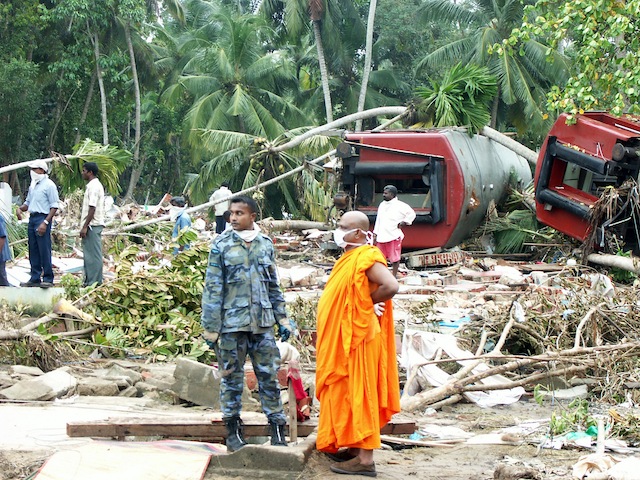
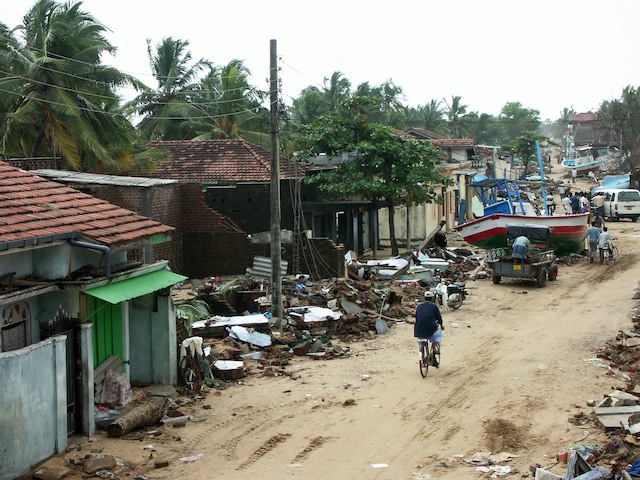
Men walk past destroyed buildings in the Hambantota town in southern Sri Lanka. Reconstruction in this town subsequently moved at a rapid pace. Credit: Amantha Perera/IPS
Ten years later, there are no large national monuments erected in memory of those who suffered in the aftermath of the disaster. There is not even a national archive of those who lost their lives. Small memorials dot the coast, but most are in serious need of a good paint job.
In the decade since the tsunami, Sri Lanka has undergone massive change. The nearly 30-year-old war is over; the displaced have returned to new or repaired homes; and for the majority of the island, the crashing waves have been relegated to the realm of a bad, fading nightmare.
But for the tens of thousands who lived through the catastrophe in 2004, the terror of that day will never be forgotten. And while development picks up around the island, with shining new roads leading the way to luxury tourist destinations, many are yet to come to terms with the loss, trauma and poverty that the tsunami brought into their lives.
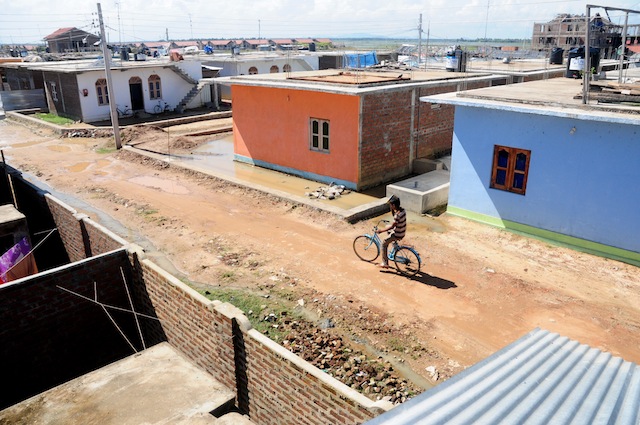
These half-built houses, part of a rehabilitation village in Kalmunai, were built using private funds. Credit: Amantha Perera/IPS
Edited by Kanya D'Almeida
© Inter Press Service (2014) — All Rights Reserved. Original source: Inter Press Service
Where next?
Browse related news topics:
Read the latest news stories:
- Cleaning Up the Fields: Across Africa and Asia GEF is Helping Farmers Rewrite Their Pesticide Story Thursday, May 07, 2026
- Why it is Time to Rewrite Africa’s Malaria Story Thursday, May 07, 2026
- Data Gaps are Hiding the Most Excluded Children Thursday, May 07, 2026
- Breaking the Cycle Between Food Production and Environmental Decline Wednesday, May 06, 2026
- Keep Inputs Moving to Keep Food Affordable Wednesday, May 06, 2026
- VENEZUELA: ‘The Credit Goes to Detainees’ Families, Human Rights Organisations and the International Community’ Wednesday, May 06, 2026
- Strengthening Financial Integrity: Why It Matters and What Needs to Change Wednesday, May 06, 2026
- How Santa Marta Finally Made Fossil Fuel Phase-Out Politically Discussable Wednesday, May 06, 2026
- UN mourns CNN founder Ted Turner, a ‘tireless champion for our common humanity’ Wednesday, May 06, 2026
- More than 70 civilians killed in Ukraine in less than a week Wednesday, May 06, 2026
Learn more about the related issues:
Share this
Bookmark or share this with others using some popular social bookmarking web sites:
 Bluesky