

COP31: New Research Ties Extreme Weather to Mental Health Challenges in Africa
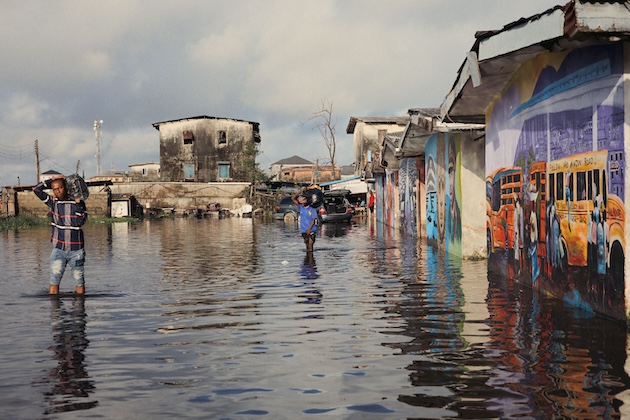
ANTALYA, Türkiye & BULAWAYO, Zimbabwe, November 12 (IPS) - Floods. Extreme heat. Droughts. African communities have experienced it all and more.
And as has come to be expected, humanitarian agencies have responded by providing essential emergency assistance such as food aid and other critical needs for affected communities amid increasingly dwindling funding.
Amid those challenges, researchers are now calling for a shift in how African governments and aid agencies respond before and after extreme weather events by focusing on mental health challenges that emerge as a direct result of floods.
According to the Africa Centre for Strategic Studies, 27 African countries “experienced unusually heavy rainfall in 2024” and affected 11 million people. Floods left more than 2,500 dead, four million displaced, and communities lost hundreds of thousands of livestock.
The extent of such losses is enough to break the stoicism of families already struggling to make ends meet in a continent where millions live in extreme poverty.
A cohort of African researchers in diverse fields that include psychiatry, epidemiology, climate science and medicine are pointing to these figures to investigate the impact of extreme weather on the mental health of flood and extreme weather victims.
And ahead of COP31 underway in Türkiye, the link between climate change and mental health in countries on the receiving end of what is considered human-driven nature’s fury is gaining traction as researchers explore the resilience of flood victims beyond relief aid.
While this year’s Conference of the Parties has “resilient health infrastructure and climate-resilient cities” as part of “action agenda priorities”, African researchers are pushing for the inclusion of mental health and psychosocial support as a critical flashing point that demands more attention in climate change discussions.
The new study led by Professor Collins Iwuji of the Africa Health Research Institute under a project called Weather Events and Mental Health in Africa (WEMA) that brought together academics and nongovernmental organisations provides insights into the devastating effects of floods in Burkina Faso, Mozambique, Kenya and South Africa.
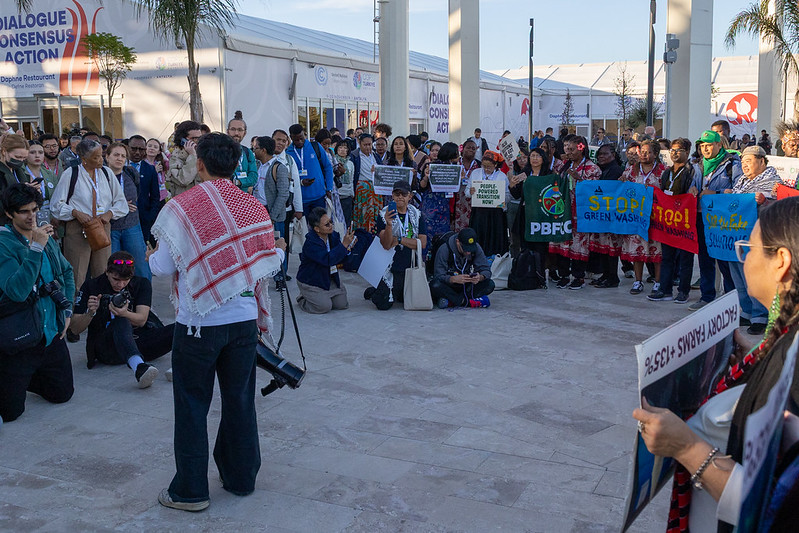
“There is a need to explore the lived experiences of people and communities impacted by climate change, especially those living in communities facing social and structural vulnerabilities,” the study found.
WEMA researchers say the findings are not representative of the whole African continent but “broaden the evidence on flooding and mental health across these regions.”
It raises questions about how the continent is handling the psychological impact of flooding on vulnerable communities with families losing their homes and livelihoods and how they deal with grief.
Last year, research by the United for Global Mental Health consortium found that “mental health was not included in the majority of national adaptation policies and, when it was included, it was often mentioned superficially and with no corresponding adaptation action.”
Dr Sanae Okamoto, a researcher at the United Nations University in Maastricht specialising in climate change and mental health, has observed that globally, governments were only allocating “around two percent of their health budgets to mental health, a number that will need to increase as climate change intensifies.”
Amid that deficit, WEMA scientists say the study seeks to change this situation, especially as the link between climate and mental health is also attracting the attention of European experts who are intensifying their research on the psychological effects of climate change.
And with the spectre of a super El Nino, preparing for climate-induced mental health challenges has become even more urgent.
The WEMA study notes that “the risks and impacts of climate change on mental health are already rapidly accelerating, resulting in several direct, indirect, and overarching effects that disproportionately affect those who are most vulnerable and marginalised.”
This report also comes as other researchers say new ideas such as “climate change anxiety” have entered the lexicon as part of efforts to understand the wider psychological impact of extreme weather.
“Across four countries we found that individuals exposed to flooding have a higher burden of mental disorders compared to individuals that were not,” said Professor Collins Iwuji of the Africa Health Research Institute, the WEMA research project lead.
“If you took away flooding, you would reduce the number of mental disorders in our study population by 25 percent,” Iwuji told Bhekisisa Centre for Health Journalism, the WEMA media partner.
A 2021 study covering young people aged between 16 and 25 years carried out in Australia, Brazil, Finland, France, India, Nigeria, the Philippines, Portugal, the UK, and the USA found that “climate change has important implications for the health and futures of children and young people, yet they have little power to limit its harm, making them vulnerable to climate anxiety.”
WEMA says the study was carried out because the “limited data on the specific effects of EWEs on mental health in Africa highlights the need for more research to guide policy and practice.”
“Mental health support must be integrated into disaster preparedness and response and the provision of psychological first aid in the immediate aftermath of these events, not six months later,” Owuji said.
Meanwhile, Oxfam reports that there have been more than 8,000 flood deaths this year (the highest level since 2013) and that monthly temperature records are being recorded in more than 100 countries, despite the toll 87 private jets have so far landed at Antalya Airport during the UN climate summit (COP31).
It says the carbon pollution of a person in the richest 1 percent has contributed 34 times more to today’s extreme heatwaves than the average person and 100 times more than someone in the poorest 50 percent.
“These records are not accidents of weather. They are the foreseeable consequences of a fossil-fuelled economy in which those who pollute most are also the best protected from its consequences,” said Oxfam International Executive Director Amitabh Behar.
Oxfam’s analysis of data from Polluterjet reveals that 87 private jets have landed at Antalya Airport since 7 November, emitting an estimated 777 tonnes of CO₂, which is equivalent to flying around the world more than three times.
Nigerian billionaire Aliko Dangote’s private jet flew approximately 4,370 kilometres from Lagos to Antalya, emitting an estimated 30 tonnes of CO₂, which is roughly the same as the average person emits in six years.During COP30 last year, 66 private jet journeys were recorded.
IPS UN Bureau Report



© Inter Press Service (20261112095440) — All Rights Reserved. Original source: Inter Press Service