

‘The War Must Stop’: Nobel Peace Laureate Oleksandra Matviichuk on the Urgent Need to Protect Ukraine’s Women and Children
BENGALURU, India, November 12 (IPS) - Four years after Russia’s all-out invasion of Ukraine, the human cost of the war keeps rising. Even though the global public eye is primarily glued to the progress of the conflict itself, its geopolitical implications and territorial bargaining, the millions of Ukrainian women and children experience the burden of this war that changed their lives and future forever.
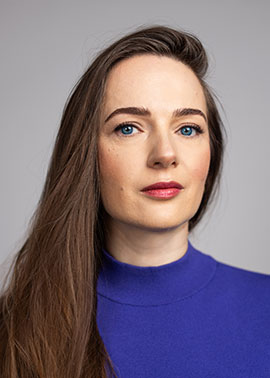
For Oleksandra Matviichuk, Ukrainian human rights lawyer, Nobel Peace Prize winner and Head of the Centre for Civil Liberties, recording the human cost of the war has become the major part of her fight for justice and accountability.
Matviichuk believes that until the war goes on, Ukrainian women would keep paying an unusual price for the opportunity to raise their children safe from Russian aggression.
Women were actively involved in humanitarian activities in Ukraine; they took care of displaced people and continued providing basic services to communities, as well as taking on duties that traditionally belong to men who either fight in the army or have fallen during the war.
However, their participation in the conflict is a huge personal sacrifice for women.
The war aggravates inequalities faced by women and girls as it makes them more vulnerable to gender-based violence, poverty, internal displacement, and psychological distress. Besides, women-led NGOs, which provide vital services ranging from psychosocial help, violence prevention, and humanitarian aid, face serious difficulties with funding in times of increased needs.
From Matviichuk’s perspective, the implications of the war go far beyond the humanitarian crisis. For her, it is the clash between two opposing systems – democracy and authoritarianism.
Matviichuk talks about the freedoms that Ukrainian women have in family and social life, comparing them with the limitations of women living in authoritarian states.
“We are fighting for our daughters. We want our daughters would never appear in situation when they have to prove someone that they also are human beings and have all freedom and all rights,” she says.
Probably there is no place where the costs of this war will become more obvious than in the life of Ukrainian children.
Children displaced, interrupted in their studies, separated from family members, attacked, and witnessing the destruction of infrastructure have lost all sense of stability and security. Many Ukrainians are forced to spend childhood in the world of air raid sirens, uncertainty and continuous loss of relatives.
According to Matviichuk, the psychological consequences of living in such conditions for a long time can cause terrible damage because trauma leaves a person trapped in the past, depriving of any future.
For the families living in Ukraine, the war has stripped them of one of the most basic necessities that can exist for anyone in this world, that is, the assurance of security in terms of knowing that they would be alive the next day. Talking about the kind of life that they have to lead today, Matviichuk explains that they go to sleep without knowing whether they or their children will wake up on the next day. “It’s very difficult to live like us when we go to bed and our children go to bed, we have no idea whether or not we will get up next morning because war is lottery and probably it will be your residential building that would be hit this night,” she explains.
However, Matviichuk says that the first sign of healing is when children start dreaming.
Collaborating with colleagues who work as psychological support for children, she asked them to record what Ukrainian children dream about.
As the result, it became clear not only how devastating war could be but how simple the children’s wishes are.
Some children dream of going to school without the need of studying online anymore. Others want to become football players in order to make their deceased parents proud of them. There is also a dream of inventing something that will help to save other people, while another dreams of becoming Secretary-General od the United Nations to prevent wars.
Others simply want their loved ones back.
“I dream that my grandmother, my best friend Misha and my dog would be alive,” reads one child’s response.
Another dreams of a new computer, Lego and, most importantly, “that Russia would stop sending missiles and drones at us.”
These are not extraordinary aspirations. They are the ordinary dreams of children who want safety, education, family and the freedom to imagine a future.
Besides the direct ramifications of displacement and violence, Matviichuk brings up another issue that is even more serious: the fate of Ukrainian children who live under the control of Russian occupation.
She says that there are systematic measures aimed at eliminating the identity of Ukrainian children through education, prohibition of language and culture, and militarization.
Matviichuk points out that children are being educated with the help of Russian textbooks which do not recognize the existence of Ukraine as a separate country. In addition, there have been reports of sending the children to Russian re-education camps where they undergo military training and identity reshaping.
According to her, the problem might be far-reaching: these children will get Russian passports and might be conscripted into the Russian army in the future.
“This is not just a human rights problem. This is a security problem.”
The issue requires the immediate international response, especially concerning the protection of children under occupation, their reunification with families, preventing forced transfer and preserving their cultural identity.
The humanitarian disaster is even further compounded by the uncertainties associated with international peace talks. Even though diplomatic endeavors have led to some hope regarding the possibility of stopping the ongoing war, Matviichuk seems to question the adequacy of such peace talks to address the problems of the people affected by the conflict.
According to Matviichuk, there is a need for continued pressure on Russia through international sanctions and confiscation of frozen Russian assets to end the war.
The international community needs to create economic and political costs that exceed the gains in the continuation of the war for the Kremlin.
Apart from these measures, it is essential to increase humanitarian efforts, empower women organizations, prevent violence against children, and provision of education, health and psychological services.
It is also important for the international community to focus on war crime prosecution, repatriation of deported children, and freeing illegally detained people.
Women and children who have been experiencing the impacts of war for years cannot only recover from rebuilding of their dilapidated structures. There is a need for the restoration of their dignity, security, economic independence and active participation in their nation-building process.
As Matviichuk explains, the effects of the war will be felt by many generations to come. Children who will lose several years of learning and who will feel the loss of their families and security will require support for many years to come even after the war ends.
The real question, however, is not only how fast Ukraine will recover, but also if the international community is ready to invest in the future that is free from fears for women and children.
A sustainable peace should guarantee not only the end of the war but also justice, accountability, freedom, and respect for the dignity of people.
Most importantly, a sustainable peace should give Ukrainian children something which they lost because of the war, the right to dream about their future.
Sania Farooqui is an independent journalist and host of The Peace Brief, a platform dedicated to amplifying the voices of women in peacebuilding and human rights.
IPS UN Bureau Report



© Inter Press Service (20261112075205) — All Rights Reserved. Original source: Inter Press Service