Middle East, Engulfed by a ‘Perfect Storm’
ROME, Apr 21 (IPS) - A perfect storm has engulfed the Middle East, and continues to threaten international peace and security.
Hardly anyone could sum up the Middle East explosive situation in so few, blunt words as just did Nickolay Mladenov, the UN Special Coordinator for the Middle East Peace Process.
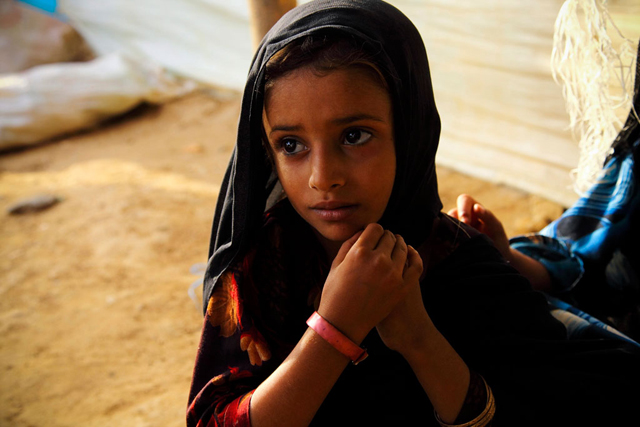
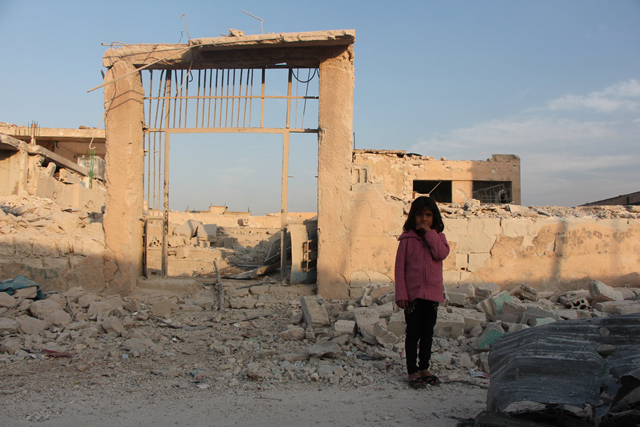
Reporting to the UN Security Council on the "dire situation across the Middle East region, marked by the largest refugee crisis since the Second World War, fractured societies, proliferation of non-State actors and unbelievable human suffering," Mladenov reiterated the need for a surge in diplomacy for peace to ease the suffering of innocent civilians.
The UN Special Coordinator also warned that "the question of Palestine remained a ‘potent symbol' and a ‘rallying cry', "one that is easily misappropriated and exploited by extremist groups."
"Let us not forget that behind the images of savagery are the millions every day not only for their own survival but for the true humane essence of their cultures and societies," he on 20 April 2017 told the Security Council.
"Today, a perfect storm has engulfed the Middle East, and continues to threaten international peace and security," he said, noting that divisions within the region have opened the doors to foreign intervention and manipulation, breeding instability and sectarian strife.
"Ending the occupation and realising a two-state solution will not solve all the region's problems, but as long as the conflict persists, it will continue to feed them."
Mladenov also informed the 15-member Security Council of sporadic violence that continued to claim lives and reported on Israel's approval of the establishment of new settlements and declaration of "State land" in the occupied Palestinian territory.
On the Palestinian side, he noted multiple worrying developments that are "further cementing" the Gaza-West Bank divide and dangerously increasing the risk of escalation.
Turning to the wider region, Mladenov briefed the Security Council members on the on-going crisis in Syria that continues to be a "massive burden" for other countries and called on the international community to do more to stand in solidarity with Syria's neighbours.
"Strong, Loud Alarm"
"The statement that Mr. Mladenov has just made should sound a strong, loud alarm," a retired Arab diplomat told IPS on condition of anonymity.
"We should always have in mind that the United Nations envoys and special coordinators use to be extremely careful when choosing their wording, in particular when it comes to reporting to the UN Security Council. This is why his words should be taken really seriously," the diplomat emphasised.
"What is anyway clear is that a new Middle East is now "under construction". Such process will not be an easy one, in view of the growing trend to embark in new cold war between the US and Russia," the diplomat concluded.
Further in his briefing, the UN Special Coordinator spoke of the situation in Lebanon, Iraq and Yemen as well as of "social exclusion and marginalisation that tend to provide fertile ground for the rise of violent extremism."
Recalling UN Secretary-General António Guterres' call for a "surge in diplomacy for peace", Mladenov urged UN Member States, especially through a united Security Council, to assume "the leading role in resolving the crisis."
"Multilateral approaches and cooperation are necessary to address interlinked conflicts, cross-border humanitarian impacts and violent extremism." "Grave Danger"
Just one week earlier, the UN Special Envoy for Syria, Staffan de Mistura, told the UN Security Council in the wake of yet another dire turn in the Syrian crisis, that the United States and the Russian Federation "must find a way to work together" to stabilise the situation and support the political process."
In his briefing on 12 April, de Mistura added that the previous week's reported chemical weapons attack, the subsequent air strikes by the US and intensified fighting on the ground have put the fragile peace process is in "grave danger."
"We must all resolve that the time has come where the intra-Syrian talks move beyond preparatory discussions and into the real heart of the matter, across all four baskets, to secure a meaningful negotiated transition package," he added.
Prior to the reported chemical attack in Khan Shaykhun area of Idlib, modest but incremental progress were made, the UN envoy noted, highlighting that though there no breakthroughs, there were also no breakdowns. The most recent round of talks, facilitated by the UN in Geneva, wrapped up three weeks ago.
However, the reported attack and subsequent events have placed the country between two paths: one leading more death, destruction and regional and international divisions; and the other of real de-escalation and ceasefire, added de Mistura.
The UN Special Envoy reiterated that there are no military solutions to the strife in the war-ravaged country.
"You have heard it countless times, but I will say it again: there can only be a political solution to this bloody conflict regardless of what some say or believe," he expressed, noting that this is what Syrians from all walks of life also say and something that the Security Council had agreed upon.
"So, let us use this moment of crisis – and it is a moment of crisis – as a watershed and an opportunity perhaps for a new level of seriousness in the search for a political solution."
© Inter Press Service (2017) — All Rights Reserved. Original source: Inter Press Service
Where next?
Browse related news topics:
- Trade, Economy, & Related Issues
- Causes of Poverty
- United Nations on Development Issues
- Third World Debt Undermines Development
- Geopolitics
- Arms Control
- Arms Trade—a major cause of suffering
- International Criminal Court
- Middle East
- Foreign Policy — Projecting Power
- Consumption and Consumerism
- Sustainable Development
- Natural Disasters
- Immigration
- Food and Agriculture Issues
Read the latest news stories:
- The Year of Pastoralists Must Be More Than Symbolic Thursday, August 06, 2026
- Rohingya Refugees Seeking Safe Haven in Bangladesh Hit by Fresh Disasters Thursday, August 06, 2026
- ‘Wanton, intentional infliction of incredible pain’ by gangs in Haiti Thursday, August 06, 2026
- Security Council LIVE: Warnings of famine and collapse as South Sudan's peace deal frays Thursday, August 06, 2026
- Gaza: 300 children killed in 300 days of Israeli-Hamas ‘ceasefire’ Thursday, August 06, 2026
- CHINA: ‘The Ethnic Unity Law Means There Is One Acceptable Way to Be Chinese’ Wednesday, August 05, 2026
- New Chickpea Variety to Drive Climate Resilience in Africa Wednesday, August 05, 2026
- Green transition: Pay the Least, Benefit the Most Wednesday, August 05, 2026
- Hiroshima fosters hope, 81 years on from nuclear catastrophe Wednesday, August 05, 2026
- World News in Brief: Cambodia human rights, Hormuz invasive species risk, IOM lauds 2025 progress Wednesday, August 05, 2026
Learn more about the related issues:
- Trade, Economy, & Related Issues
- Causes of Poverty
- United Nations on Development Issues
- Third World Debt Undermines Development
- Geopolitics
- Arms Control
- Arms Trade—a major cause of suffering
- International Criminal Court
- Middle East
- Foreign Policy — Projecting Power
- Consumption and Consumerism
- Sustainable Development
- Natural Disasters
- Immigration
- Food and Agriculture Issues
Share this
Bookmark or share this with others using some popular social bookmarking web sites:
 Bluesky