

GEF Proposes $140 Million Program to Strengthen Drought Resilience
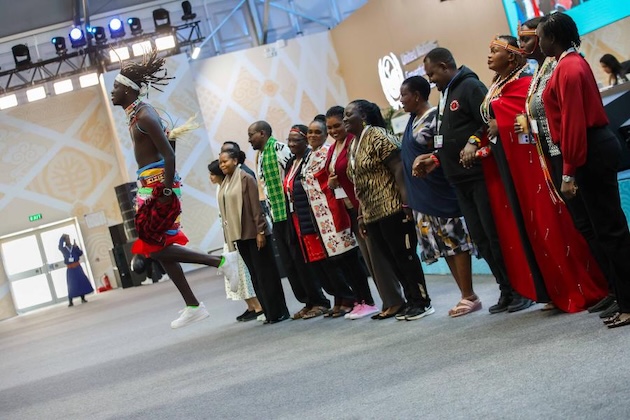
DAR ES SALAAM, Tanzania, August 24 (IPS) - For pastoralists in Arvaikheer — a village in Mongolia’s dry central plains — rain can determine whether there is enough grass for cattle to roam, whether waterholes are replenished and whether families make it through another dry season. But as climate change makes rainfall increasingly unpredictable, even a wet season may no longer provide water and pasture needed to sustain people and livestock.
The challenges being experienced across Mongolia’s drylands are at the centre of discussions at the 17th session of the Conference of the Parties to the United Nations Convention to Combat Desertification (UNCCD COP17) in Ulaanbaatar, where governments are devising measures to tackle menacing drought, desertification and land degradation.
It is against this backdrop that the Global Environment Facility (GEF) has announced plans for a new $140 million initiative aimed at helping countries prepare for drought, strengthen resilience in drylands and reduce the growing risks to ecosystems, food security, water availability, livelihoods and health.
The Drylands and Drought Management Integrated Program will be implemented during the GEF-9 investment cycle from 2026 to 2030. It responds to requests from parties to the UNCCD for the GEF to give greater priority to financing programs related to drought resilience.
The program will focus on helping countries and communities better prepare for, monitor, assess, mitigate and respond to the cascading impacts of drought.
“Investing in healthy land and healthy people means investing in food security, climate resilience, biodiversity, water, jobs, and peace,” said the GEF Interim CEO and Chairperson, Claude Gascon, in a statement. “Through this new integrated program, we will support countries in moving from crisis response toward proactive drought resilience.”
The announcement comes as negotiators at COP17 are discussing an array of measures to tackle drought and land degradation, including financing, private-sector engagement, capacity-building and support for rangelands and pastoralists.
Rangelands Under Pressure
Rangelands have emerged as a major focus of the Ulaanbaatar talks.
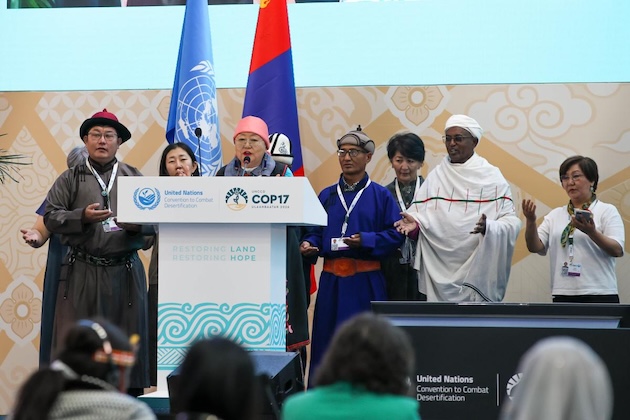
Delegates have been discussing policies and investments for their sustainable management while recognising the importance of rangelands and pastoralist communities in addressing food insecurity, desertification, land degradation, drought, biodiversity loss and climate change.
For pastoralists, the effects of changing rainfall patterns are already devastating.
After rain, parched rangelands can quickly turn green, water sources refill and livestock gain access to fresh pasture. But the COP17 discussions have highlighted how climate change is altering these life-sustaining rains, making them more erratic and intense and reducing their effectiveness through increased runoff.
Land degradation can increase risks to human health, contribute to forced migration and intensify conflicts over scarce resources. It is also closely linked to climate change, biodiversity loss, poverty and food insecurity.
The GEF’s new program, therefore, comes at a time when drought is increasingly treated as a development and livelihood challenge rather than solely as an environmental emergency.
Financing Remains a Challenge
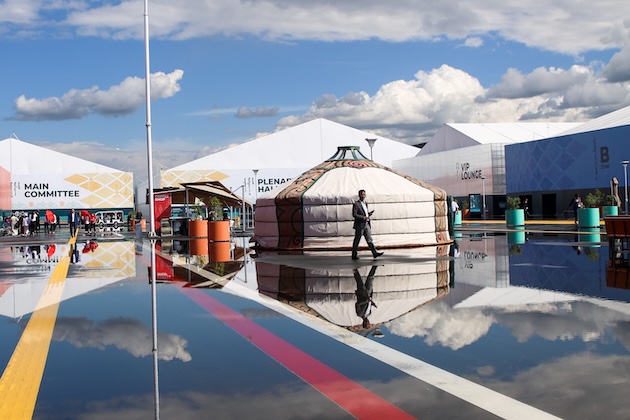
But international commitments to increase investment in drylands will face a litmus test to ensure that money reaches communities managing these landscapes.
During an open dialogue at COP17, civil society participants highlighted barriers to accessing funds as one of the challenges facing pastoralist communities, alongside pressures such as mining.
Participants called for better connections between financing and market mechanisms and the diverse local economies of pastoralists. They also urged governments and institutions to integrate targets for land degradation neutrality with pastoralist-designed and community-led initiatives.
That emphasis on local participation is significant for the GEF, which says that under GEF-9, 20 percent of resources across its family of funds are expected to directly benefit Indigenous Peoples and local communities.
Delegates at COP17 have also welcomed the Rangelands Flagship Initiative, a multi-partner global initiative led by Mongolia and the UNCCD. The initiative is built around three areas: knowledge, investment and institutions.
The GEF is supporting its development and coordination through the UNCCD COP17 Legacy Project, a $3.3 million GEF investment implemented by the International Union for Conservation of Nature. The project is leveraging an additional $8 million in co-financing from Mongolia and IUCN, according to the GEF.
A Wider Investment Push
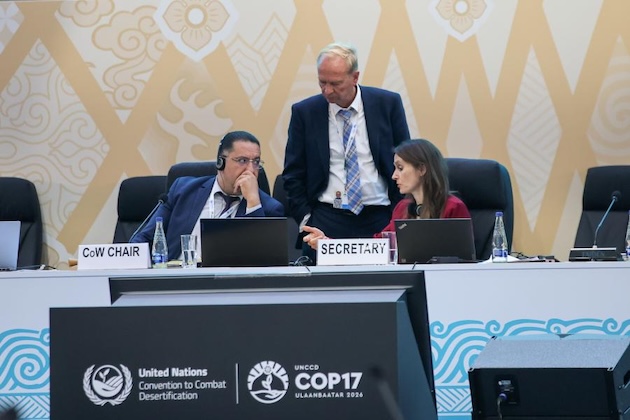
The new drought program is part of a broader expansion of environmental financing under GEF-9.
The investment cycle begins with an initial programming level of $3.9 billion and is designed to expand investments in nature-positive development, drought resilience and sustainable land management.
Four GEF-9 integrated programs are strongly aligned with UNCCD objectives and are expected to receive more than $800 million in GEF grant funding. They cover food systems, critical forest biomes, blue and green islands and drylands and drought management.
Drought resilience is also being given a more prominent place in the way GEF resources are allocated and measured.
The GEF-9 cycle includes a dedicated objective for implementing national drought plans, a drought vulnerability index in the formula used to calculate resource allocation to countries and new indicators to track improvements in drought resilience.
The approach reflects a growing recognition that drought can insidiously weaken ecosystems, livelihoods and food systems long before it becomes a full-blown crisis, leaving communities more exposed to the next shock.
From Crisis Response to Prevention
The GEF also plans to work with the Riyadh Global Drought Resilience Partnership, the Drought Resilience Investment Facility and other initiatives supporting resilience across drylands and rangelands.
During GEF-8, covering 2022 to 2026, the facility approved 50 projects across its family of funds supporting sustainable rangeland management and restoration and pastoralist livelihoods, with a total investment of more than $300 million.
The projects are at different stages of development and, according to the GEF, can complement the Rangelands Flagship Initiative and help take successful approaches to rangeland management and restoration to scale.
The new initiative also places a stronger emphasis on mobilising private capital.
Ten percent of total GEF-9 funding is allocated to a blended finance window, while the overall target is to use 25 percent of GEF resources to help mobilise private sector investment.
For countries vulnerable to drought, the challenge will be converting those financial commitments into practical investments that strengthen water security, restore degraded land and protect the livelihoods of communities dependent on drylands.
At COP17, where discussions on drought, rangelands, financing and pastoralist livelihoods are unfolding simultaneously, the GEF initiative offers a potentially significant new source of funding.
But the experience of pastoralist communities points to a broader question: whether global commitments and financing mechanisms can reach the people managing the land on the ground — and whether investments can arrive early enough to prevent drought from becoming a crisis.
IPS UN Bureau Report
© Inter Press Service (20260824095351) — All Rights Reserved. Original source: Inter Press Service