

Africa Makes Some Gains but Faces Major Setbacks at COP31
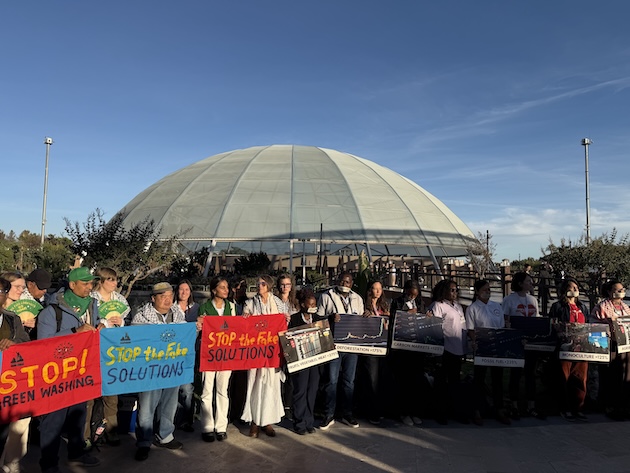
ANTALYA, Türkiye, November 16 (IPS) - Today (November 15) marks the second week of negotiations at the United Nations climate summit in the resort city of Antalya, Turkey.
This two-week Conference of the Parties, or COP31, comes as scientists have warned that the world is approaching the 1.5C warming limit set by the Paris Agreement in 2015.
Although scientists measure the target over decades, not individual years, they found that the planet crossed that threshold for the first time over a full year in 2024.
Scientists predict that sustained breach of 1.5°C is now unavoidable, and existing policies could drive warming to 2.8°C this century, increasing the risk of extreme heat, floods and droughts, according to the UN Environment Programme (UNEP).
For the temperatures to fall back below 1.5C, much bigger cuts in emissions and removing large amounts of carbon dioxide from the atmosphere are required.
The latest climate plans would cut global emissions by just 6 percent by 2035 compared with 2019 levels – far short of what is needed, according to the UN’s climate change body.
With negotiations in the Mediterranean country in the second week, Africa made some progress but also lost some critical issues it was pushing.
Africa’s Wins
On the first day of COP31, negotiators from Africa and other developing countries secured a formal place for the Climate Finance Work Programme (CFWP) on the official agenda.
The CFWP matters to African countries because it focuses on scrutinising developed nations’ legal obligations under Article 9.1 of the Paris Agreement to provide public and concessional climate finance to developing countries.
Wealthy nations did not want to establish a dedicated space to discuss climate finance.
For African nations, the CFWP helps press for concrete financial accountability, particularly on pledges such as the $300bn annual climate finance by 2035 agreed at COP29 in Baku, Azerbaijan.
During COP31, the Leaf Coalition, a public-private global initiative designed to halt tropical deforestation by mobilising large-scale financial support for forest-protecting jurisdictions, announced that Ghana would be the first country to access finance for a carbon credit project.
Ghana will get millions of dollars as buyers transact credits. The REDD+ program covers approximately 2.5 million hectares of forest across 10 regions in southern and central Ghana, where forests are under threat from agricultural expansion, illegal logging and mining.
Climate activists have criticised the initiative as a false climate solution and greenwashing, saying it delays actual decarbonisation while allowing high-emitting companies to keep polluting.
Major Setbacks
Africa’s bid to create a dedicated, standalone agenda item for tripling adaptation finance did not make it to this year’s COP agenda after wealthy nations opposed it. This was a tremendous blow to African countries. Parties agreed to triple adaptation finance at COP30 in Belém, with a target year of 2035.
However, the agreement did not settle the critical questions such as scope, baseline, delivery timelines, milestones and accountability arrangements. The African Group of Negotiators (AGN) wanted the issue to be at the centre of COP31. Without clarity on these elements, tripling risks becoming another political promise without a practical mechanism for implementation.
It is unclear what the baseline for the tripling is. If it is tripling from the US$40bn agreed at COP26 in Glasgow, developed countries will triple adaptation finance to US$120bn annually by 2035.
This issue is important because African countries lose an average of 2% to 5% of their Gross Domestic Product (GDP) every year because of climate extremes. Yet governments in Africa spend up to 9% of their annual budgets on unplanned disaster relief and climate response.
Now, Africa is pushing for adaptation finance to be discussed under the Global Goal on Adaptation (GGA). Anchoring tripling of adaptation finance in the GGA discussions would ensure that finance is driving clear implementation, including addressing the growing adaptation needs of developing countries, strengthening climate resilience and improving access to finance.
Another setback for Africa is the Belém Action Mechanism (BAM) – a global climate mechanism established to guide, coordinate, and support a just transition for workers, unions, and vulnerable communities as the world shifts to a low-carbon economy. It was a big win for the continent at COP30 in Belém, Brazil.
Parties should agree on its operational details at COP31.
The latest draft negotiating text on BAM does not show that it can deliver practical support for just transitions. Wealthy nations want the already overstretched UN climate secretariat and external institutions, including development banks, to take responsibility. Africa does not want another bureaucratic process.
IPS UN Bureau Report



© Inter Press Service (20261116082852) — All Rights Reserved. Original source: Inter Press Service