

GLOBAL GOVERNANCE: ‘A New World Order Is Going to Emerge, Whether We like It or Not’
CIVICUS discusses the case for United Nations (UN) reform with Heba Aly, director of the Article 109 Coalition, an international civil society network that calls on states to review and update the UN Charter.
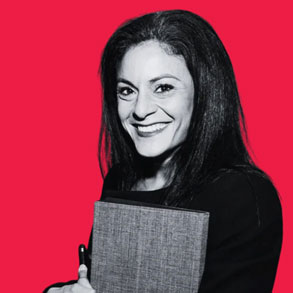
In its ninth decade, the UN is in deep crisis. Major powers are rewriting the international rules and the organisation has struggled to respond to wars and other global threats. So far, reform efforts have focused on spending cutbacks rather than on rebalancing power within the UN. A growing civil society coalition is now urging states to take a more ambitious route by invoking Article 109 of the UN Charter to convene a General Conference to review the founding document.
Why does the UN Charter need reforming?
Our world faces multiple existential challenges. Violence and conflict are on the rise, as seen in Gaza, Iran and Ukraine, among other places, and the UN has been unable to respond meaningfully. The changing climate is devastating communities, with the recent flooding in Nepal just the latest example. AI is going off the rails, with AI agents acting rogue in the absence of regulation. And big powers are threatening nuclear war. Our current global governance systems are not equipped to deal with any of this.
At the same time, the UN is under attack. The USA, its historic architect, is now undermining it by questioning its effectiveness, cutting its funding and establishing competing bodies. Other states are retreating from multilateralism, some because they don’t want to play by the rules, others because they feel the UN doesn’t represent the interests of the majority.
That is in part because the UN’s architecture still reflects the world of 1945 rather than that of 2026 and still privileges five countries that won a war over 80 years ago. Its Charter was adopted before the internet, before the atomic bomb was dropped on Hiroshima, before the idea of planetary boundaries.
Triggering Article 109 of the UN Charter, which establishes the process for convening a General Conference of UN member states to review and update the Charter, offers the possibility of bringing the UN into the 21st century.
How can Article 109 be triggered, and why use it?
Triggering Article 109 requires a two-thirds majority vote in the UN General Assembly, where every state has a seat, plus the support of nine of the 15 members of the Security Council. This means the five permanent members of the Security Council cannot veto a conference being held. So triggering Article 109 is very much within reach.
Article 109 offers a pathway to a renewed UN architecture that is democratic, inclusive and fit for the 21st century, and legitimate because it is rooted in the Charter. It was a concession made in 1945 to the many countries that opposed giving the five permanent Security Council members veto power, with the promise that this would be revisited by the UN’s 10th year. The purpose of Article 109 was also to offer the means to adapt the organisation to changing world circumstances, based on learning from its first years of operation. Eighty-one years on, this built-in review mechanism has never been used. It’s an opportunity hiding in plain sight.
A General Conference would bring all states together to discuss openly what is and is not working in international governance, and where changes are needed for everyone’s benefit. Many states have grievances about the current system, and giving them a chance to share their vision of a future UN can help rebuild much-needed trust.
What about the risk of making things worse?
The threats the world faces today need urgent action. If we do nothing, the UN could collapse altogether.
Our recent analysis of voting patterns at the UN General Assembly shows that efforts to roll back norms on climate change, gender and human rights have failed to secure two-thirds majority support, which is the threshold required to change the Charter. The data simply does not support the suggestion that a majority of states would back an outcome that dilutes fundamental principles of the Charter. In fact, it suggests quite the opposite. An overwhelming majority of states have expressed support for human rights and multilateralism, as evidenced by initiatives such as the Friends of Human Rights and Multilateralism, the Hague Group and Partners for Multilateralism.
A new world order is going to emerge, whether we like it or not. It will be either built by the powers who are de facto changing realities on the ground or shaped through a structured and inclusive process where every state has a voice. That’s what a General Conference to review the UN Charter would offer.
What would reform mean for people in the global majority?
Most of the effects of today’s crises are felt in global majority countries. Take climate change. It is estimated that some 143 million people in global majority countries will be displaced by its effects by 2050. The disproportionate impact of the COVID-19 pandemic on global majority countries was another striking example.
Most of these crises stem from failures of global governance and inequitable decision-making at the global level. And that is in part because international institutions tend to exclude global majority voices. This means the countries suffering the most do not have enough of a voice in the fora set up to tackle these challenges.
The Security Council is an example of this. Although the majority of its work is dedicated to Africa, the continent does not have a permanent seat on the Council.
A review of the UN Charter is an opportunity to rebalance power and ensure equitable access to resources and equal protection from harm. It is an opportunity for the global majority to shape the next world order in a way they could not in 1945, when many countries, still under colonial rule, did not have a seat at the table.
What role should civil society play in reform?
There is strong public support for international cooperation and an effective UN. One recent poll found that 57 per cent of people across 34 countries want their country to work with others to take on common threats, even if it means compromising on some national interests. And in another, 73 per cent of people who had an opinion about the UN said it needed reform.
Civil society therefore has an essential role in channelling public demands for a UN that can deliver effective international cooperation. It can help push states to embrace a more ambitious vision of multilateralism and pressure them to meet the moment.
Civil society can also help think through the outcomes we want from a Charter review and from a future UN and, during negotiations, hold governments accountable for outcomes that benefit people. Those outcomes could include a much more formal role for civil society at the UN. Today civil society engagement at the UN is often a tick-box exercise, and many civil society organisations face restricted access. A renewed Charter could codify a role for civil society in international decision-making that goes beyond today’s voluntary consultative approach.
I encourage civil society organisations that are interested in rebuilding international cooperation to get in touch and join the hundred-plus organisations that are already part of our network.
There are reasons for hope. In recent months, many western leaders have echoed what leaders from the global majority have been saying for some time: that the current world order is not fair and that we need something more equitable. Now we have an opportunity to make that happen.
CIVICUS interviews a wide range of civil society activists, experts and leaders to gather diverse perspectives on civil society action and current issues for publication on its CIVICUS Lens platform. The views expressed in interviews are the interviewees’ and do not necessarily reflect those of CIVICUS. Publication does not imply endorsement of interviewees or the organisations they represent.
GET IN TOUCH
Website
Instagram
LinkedIn
Twitter
SEE ALSO
Global governance: power politics tests global rules CIVICUS | State of Civil Society Report 2026
UN: ‘The NGO Committee must be reformed to facilitate rather than obstruct civil society access’ CIVICUS Lens | Interview with Maithili Pai 24.Apr.2026
Global governance: ‘The current order could collapse, or it could be reshaped to work for everyone’ CIVICUS Lens | Interview with Waheguru Pal Sidhu 16.Apr.2026



© Inter Press Service (20261113081553) — All Rights Reserved. Original source: Inter Press Service