Kenya Is Doing Its Part to Battle Drought, We Must Too
NAIROBI, Kenya, Apr 28 (IPS) - After three years of drought and failed harvests, Kenya is in the grip of a national crisis.
All eyes are on neighbouring Somalia and South Sudan – where the needs are indeed greater and more acute – but we must not forget the nearly 3 million Kenyans whose lives have been blighted by these extreme conditions.
Kenya has allocated US$128 million towards the national drought response effort, expanded social safety nets, and is working with the international community to mitigate the impacts of the drought on the most vulnerable.
But the US$166 million appeal launched by the UN and partners in March 2017 has raised a mere 18 per cent of its funding target, US$10.3 million of which from the UN's own Central Emergency Response Fund (CERF).
Governments that respond to humanitarian needs must be rewarded with support, not penalised by an international community that looks the other way. This will only deepen the Horn of Africa's humanitarian crisis.
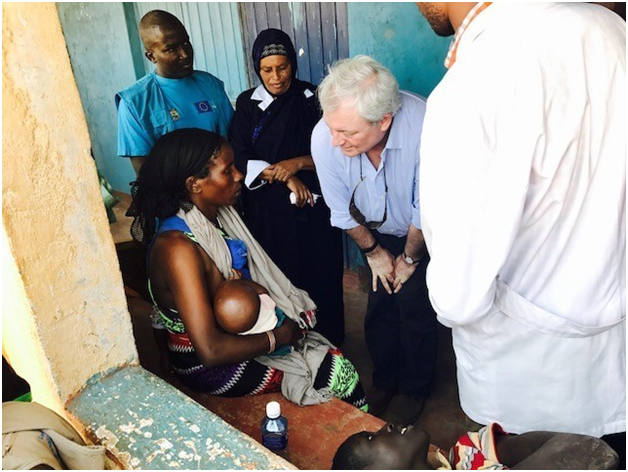
Thousands of Kenyans are on the move – escaping thirst, hunger and disease. The number of people facing severe food insecurity – 2.6 million – has tripled in less than a year. Even more have trouble accessing clean water. Children are suffering from acute malnutrition and preventable diseases like diarrhoea, measles and cholera.
Consider this, as many as 19,000 children's lives are lost each year in Kenya due to malnutrition.
The Kenya Food Security Steering Group who have been monitoring food insecurity trends across the country. Its data and analysis helps to alert to growing needs and inform the response, which is coordinated through the National Drought Management Authority.
The Government is financing livestock insurance from private companies to sustain thousands of vulnerable pastoralists whose herds have been decimated by drought.
Supported by Equity Bank, the Kenya Hunger Safety Net Programme (HSNP) oversees cash transfers to thousands of vulnerable residents in the country's arid northern counties.
Here is a Government that is doing its part, but the rest of the world is not.
Without assistance, Kenya's severely food insecure population could surge to 4 million during the second quarter of 2017. Thousands more children will drop out of school and more herders will cross borders in search of pastures. Tensions will rise and diseases will spread.
The international community can stop this from happening by getting behind Kenya's drought response effort, which is so critical to the security and stability of the Horn of Africa.
With US$20 million we could stem the spread of cholera and diarrhoea by providing access to clean water and sanitation. An additional US$30 million would finance supplementary feeding for 545,000 children over six months in areas that have exceeded emergency thresholds for acute malnutrition by 200 per cent like Turkana, Marsabit and Mandera.
With US$166 million, we would enable nearly 3 million people to get through this devastating crisis.
"Sticks in a bundle are unbreakable," says an African proverb. Let's put our sticks in a bundle to make Kenya's drought response – and its communities – unbreakable.
© Inter Press Service (2017) — All Rights Reserved. Original source: Inter Press Service
Where next?
Browse related news topics:
- Trade, Economy, & Related Issues
- Causes of Poverty
- Third World Debt Undermines Development
- Free Trade and Globalization
- Arms Control
- Arms Trade—a major cause of suffering
- Conflicts in Africa
- International Criminal Court
- Human Rights Issues
- Environmental Issues
- Biodiversity
- Nature and Animal Conservation
- Climate Change and Global Warming
- Consumption and Consumerism
- Sustainable Development
- Natural Disasters
- G8: Too Much Power?
- Food and Agriculture Issues
- Democracy
- Global Financial Crisis
Read the latest news stories:
- Who picks up the tab for AI’s unbridled genius? Monday, August 03, 2026
- Rohingya Repatriation: A Roadmap Without a Road Monday, August 03, 2026
- Trapped by a Facebook job advert, freed by a stranger in a taxi Sunday, August 02, 2026
- Recovery in Ukraine, one life at a time Saturday, August 01, 2026
- East Asia and Pacific Faces a USD 900 Billion Maritime Investment Challenge Friday, July 31, 2026
- ARMENIA: ‘Anti-LGBTQI+ Discourse Is Increasingly Tied to Anti-democratic Narratives’ Friday, July 31, 2026
- US Casualty Figures Keep Fluctuating in War with Iran Friday, July 31, 2026
- Middle East: Civilian death toll climbs in Gaza, Lebanon and West Bank as UN chief demands ‘the fighting must stop’ Friday, July 31, 2026
- Wildfire smoke poses hidden health threat Friday, July 31, 2026
- Strong El Niño ahead, UN weather agency warns Friday, July 31, 2026
Learn more about the related issues:
- Trade, Economy, & Related Issues
- Causes of Poverty
- Third World Debt Undermines Development
- Free Trade and Globalization
- Arms Control
- Arms Trade—a major cause of suffering
- Conflicts in Africa
- International Criminal Court
- Human Rights Issues
- Environmental Issues
- Biodiversity
- Nature and Animal Conservation
- Climate Change and Global Warming
- Consumption and Consumerism
- Sustainable Development
- Natural Disasters
- G8: Too Much Power?
- Food and Agriculture Issues
- Democracy
- Global Financial Crisis
Share this
Bookmark or share this with others using some popular social bookmarking web sites:
 Bluesky