

BRAZIL: ‘Resistance Is Intergenerational, and Art Is How Energy Gets Renewed’
 : CIVICUS discusses the role of art in climate and rights struggles in the Brazilian Amazon with Tom Wheeler, executive director and co-founder of Treesistance. Treesistance is a platform operated by the Netherlands-based Sinchi Foundation that partners with Indigenous communities across four Brazilian states on cultural preservation and forest protection. Indigenous peoples steward a large share of the world’s forest biodiversity but receive only a small fraction of global conservation funding and are often excluded from climate and environmental decision-making spaces. Their traditions, oral histories and visual cultures are under pressure, including from land loss and the slow erosion of […]
 :
CIVICUS discusses the role of art in climate and rights struggles in the Brazilian Amazon with Tom Wheeler, executive director and co-founder of Treesistance. Treesistance is a platform operated by the Netherlands-based Sinchi Foundation that partners with Indigenous communities across four Brazilian states on cultural preservation and forest protection.
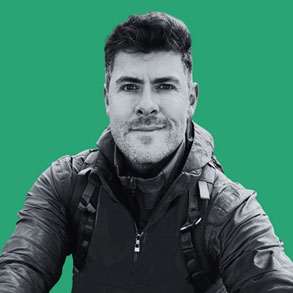
Indigenous peoples steward a large share of the world’s forest biodiversity but receive only a small fraction of global conservation funding and are often excluded from climate and environmental decision-making spaces. Their traditions, oral histories and visual cultures are under pressure, including from land loss and the slow erosion of intergenerational knowledge.
How did art become the centre of a forest protection initiative?
Sinchi, the foundation behind Treesistance, was set up in 2016 as a cultural organisation. I believed we needed a societal or spiritual shift, so in our first years we ran festivals, film screenings, galleries, music events and debates, and built art and documentary projects with Indigenous communities across six continents.
At some point I went through a bit of a crisis, questioning what real impact this work was having. Then I met Vandria Borari, a brilliant Indigenous lawyer and celebrated ceramic artist from western Pará, a state in the Brazilian Amazon. She introduced me to the Tapajós and Arapiuns Indigenous Council, an association that represents 14 Indigenous groups in the Lower Tapajós region. In 2021, our focus shifted to the Amazon, and in 2023, together with our Indigenous partners, we co-created Treesistance as a platform built around four pillars: access to justice, communications, renewable energy and sustainable economic development.
The access to justice work is what we’re best known for. We support Forest Guardians, community-led groups that patrol and defend Indigenous territories against illegal logging and other threats, and we help build strong relationships between the territories and Brazil’s Public Prosecutor’s Office, which has a constitutional mandate to defend Indigenous rights.
That shift toward tangible, on-the-ground impact didn’t push art aside. If anything, it made clear how essential it was. Art isn’t a side product or a tool for us. It’s central to the community aspect of this work, to participation and authenticity, and to what the wider decolonial tradition is trying to achieve, of giving voice to communities and centring them in their own stories. Everything we do is co-created, but it’s led by our Indigenous partners. This carries multiple meanings for them, not least the pride of building something of their own from the ground up.
What’s the Tales of Resistance project?
Tales of Resistance is led on the ground by Vivi Borari, a talented young Indigenous woman. The idea was to build an archive, first and foremost for Indigenous communities’ use and records, telling the stories of the Majés and Pajés – plant healers, shamans and spiritual guides within these territories – from the inside out.
The project is about telling their origin stories, how they work within the community, what their roles and responsibilities are and the messages they carry from the spirits to the world. Once those stories exist on the communities’ terms, and with their consent, they can also travel further, which is why we’re now developing them into an exhibition. That kind of storytelling matters because one of the biggest challenges impact organisations face is talking only to people who already agree with them and failing to reach beyond that circle. Art and storytelling are how you break through.
We also took a deliberately different approach to how these stories are gathered. Turning up with a camera and asking people to explain their culture on the spot is a very western way of working. Just imagine how strange it would feel if someone did that to you. So we don’t do that. For us, everything starts as an audio recording while we are sitting together, having tea, walking in the forest, just talking about people’s experiences. Many of these stories would simply never be told in front of a camera. Only afterwards do we do a photo shoot, and that’s when we layer the audio and images together.
What films have you made, and what impact have they had?
Two years ago, we made a short film, Curupira, sharing the story of one of the forest’s spirits as told by one of the communities we work with. It was nominated for awards at film festivals around the world. It’s a tangible example of what storytelling can do for us. It brought in new interest, funders, partners and collaborators, people who wouldn’t otherwise have found their way to this work.
In 2026, we released another short film, Surara – Spirit of Resistance, directed by Lea Hejn, which won the Guardians in Action category at the Santiago Wild Film Festival in Chile. It includes footage from patrols led by Chief Dadá Borari, head of our Forest Guardian programme.
What changes when communities see themselves represented, and why do you call this resistance rather than activism?
The cultural scene, in the global south as much as the global north, is still working through questions of representation, making sure people see the diversity of their context reflected on screen. As Vivi has said, our biggest impact comes when Indigenous people see themselves and their reality reflected. This changes their self-perception. They no longer see themselves as victims but as people with agency, as fighters. That’s a qualitative impact that’s genuinely hard to put into a single sentence or measure in the way we measure hectares protected. But it’s real, and it’s the storytelling and narration that make it happen.
That’s also why we don’t use the word ‘activism’ much. It’s a strange word, a badge of honour to some people, something to avoid for others, and I think it’s fundamentally a western construct. There shouldn’t be anything activist about wanting to protect the health of the planet or stand up for human rights. That should be a key component of being a good person.
For our Indigenous partners, the stakes are different, though. For them, this work is intrinsic to survival, both literally, given the violence they face from illegal and aggressive forces, and culturally, in the sense of keeping traditions such as their graphic art and oral storytelling alive.
‘Resistência’ is the word I hear most often within Indigenous communities, whether people are talking about protecting their culture or land. It’s not a one-off response to a single government or form of exploitation, but something long-term and intergenerational, and like any form of resistance, the energy behind it runs low if it isn’t renewed. Art is one of the ways that energy gets renewed, generation after generation. That’s why we called the storytelling project Tales of Resistance and the wider platform Treesistance.
What other art initiatives do you run?
Storytelling extends into our product collaborations with local Indigenous artists, who create things such as clothing and notebooks. One example is Guardian of Nature, a T-shirt based on the Guardians’ uniform design. Buying one pays for a uniform for a Forest Guardian on the ground.
We’ve also launched a drink called Purpose, now going into restaurants in the Netherlands. A portion of the proceeds from every bottle sold supports our Forest Guardian projects. The brand itself is built around storytelling. It’s about people identifying their own sense of purpose in the world. So it’s art, but commercially driven, aimed at creating impact on the ground.
We held an open art and design competition for Indigenous artists from the 14 ethnic groups or nations of the Tapajós, focused on expressing their culture and relationship with nature. It brought the artists local and regional recognition through an event where the Indigenous Council, artists and other partners came together to celebrate the work.
How do you avoid the exploitative imagery typical of development fundraising?
Traditional development fundraising tends to rely on a particular kind of emotional imagery – a poor person, a hungry child, an old man in need – because that’s what drives donations from the kind of donor it targets. We deliberately avoid that.
There’s a well-known quote, often attributed to the Aboriginal Australian academic Lilla Watson, although she credits it to a collective of Aboriginal activists, that says, ‘If you have come here to help me, you are wasting your time, but if you have come because your liberation is bound up with mine, then let us work together’.
None of the communities we work with are looking for charity. The role they play in protecting the Earth and their culture has real value in itself and, in my opinion, we need their wisdom more than they need us. We never describe ourselves as the communities’ funder. We’re a partner. When we help raise money, we’re clear that it was never ours to begin with. If it comes with requirements attached, the conversation is always about how we meet them together rather than about us imposing them. That’s the same principle whether we’re talking about a grant, a story or art. It has to build something the community owns, not something we extract.
CIVICUS interviews a wide range of civil society activists, experts and leaders to gather diverse perspectives on civil society action and current issues for publication on its CIVICUS Lens platform. The views expressed in interviews are the interviewees’ and do not necessarily reflect those of CIVICUS. Publication does not imply endorsement of interviewees or the organisations they represent.
GET IN TOUCH
Website
Instagram
LinkedIn
SEE ALSO
‘Art is the only weapon that doesn’t hurt or kill’ CIVICUS Lens | Interview with Tara Abdullah 17.Sep.2026
‘Art has proven itself the one thing that can reach the world and stir it into action’ CIVICUS Lens | Interview with Iman Aoun 14.Sep.2026
‘Thanks to art, climate change stops being a distant issue – it becomes personal, immediate and visceral’ CIVICUS Lens | Interview with Nicola Haskins 17.Sep.2024



© Inter Press Service (20260928041755) — All Rights Reserved. Original source: Inter Press Service